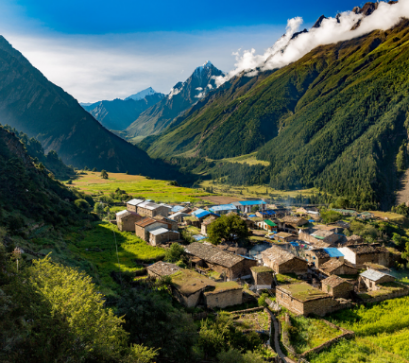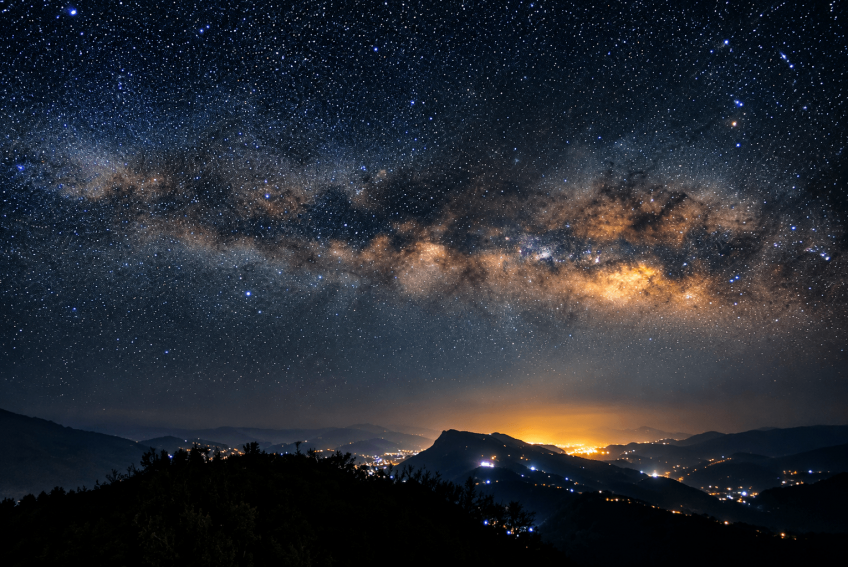
Pokhara is usually visited for its daytime scenery: sunrise views from Sarangkot, reflections on Phewa Lake, and paragliding above the valley. After dark, the hills surrounding the valley serve a different purpose, sitting high enough above the urban glow of Lakeside to give clear views of the night sky over Machhapuchhre (Fishtail) and Annapurna South. Several named camping spots ring the valley, each reached differently and each offering a different angle on the range.
The most accessible of the group: a one-hour drive to Kande followed by a 1 to 1.5-hour uphill trek. Its meadow sits on an open ridge with minimal tree cover, giving wide, unobstructed views of Annapurna South and Hiunchuli, and it is commonly booked as an organised overnight camping trip.
Lower and easier than most other sites, just 30 minutes from Lakeside. Its night view is distinctive for combining the valley's lights below with the mountain silhouette above, rather than offering true darkness in every direction.
Reached by a 1.5-hour drive or a hike via Chorepatan and Raniban. It sits opposite the main city basin and looks north across the dark valley floor toward the range, making it a quieter, less-trodden option for travellers wanting distance from marked trekking routes.
Above Begnas and Rupa Lakes, a 1-hour drive plus a 45-minute walk. It is set apart by its lake views: starlight reflecting off Rupa Lake below, with the snow peaks visible in the distance.
The highest and least accessible site, reached by a boat crossing of Phewa Lake to Pamdur or Ghatichhina followed by a 4 to 5-hour trek through rhododendron forest. It is regarded as a sacred site locally, and its altitude and distance from the valley give it the darkest skies of the group, with the Milky Way reported visible to the naked eye on clear autumn nights.
Around 45 minutes from Pokhara, set among Gurung villages with community lodges. This offers a more settled camping option with low light pollution.
The most remote option, requiring a 3 to 4-hour jeep drive or a multi-day trek, with minimal artificial light reported in the area.
Autumn (October–November) gives the clearest post-monsoon skies; spring (March–April) is warmer but can bring haze. Photographers are advised to time trips around a new moon. Camping within the Annapurna Conservation Area, which includes Australian Camp and Panchase, requires an ACAP permit. Cold overnight temperatures at these elevations call for a warm sleeping bag, and camera batteries should be carried as spares, since cold weather drains them quickly.