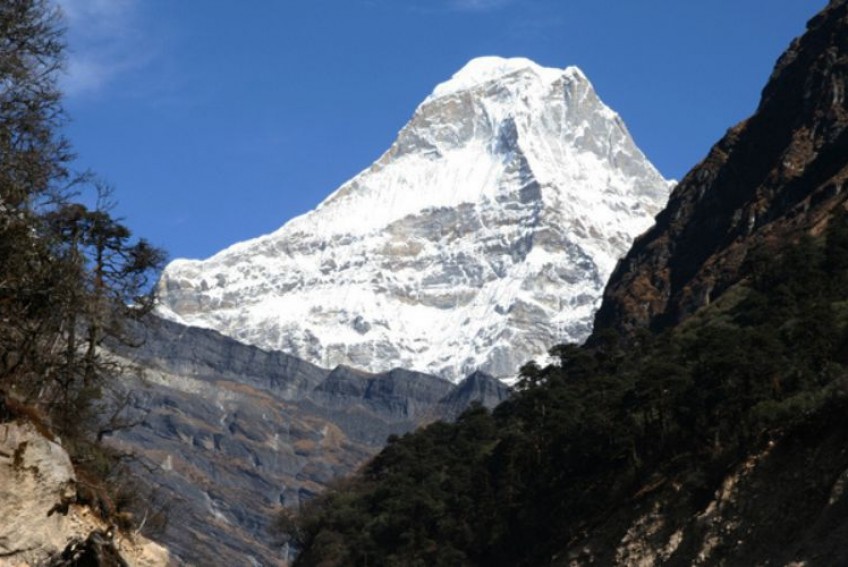
Often overshadowed by its towering neighbours, Mount Kyashar (6,769m), also known as Peak 43 is among the most striking yet least-visited mountains in eastern Nepal. Rising above the upper Hinku Valley, it presents a compelling combination of technical difficulty, isolation, and pristine Himalayan terrain, making it a serious objective for experienced alpinists.
A Quiet Giant in the Everest Region
Situated within the remote reaches of the Khumbu Himal, Kyashar lies between the more frequented Everest and Makalu corridors. Despite this proximity, it remains largely untouched, attracting only a small number of expeditions.
Its defining characteristic is remoteness offering a markedly different experience from the busier trekking routes of the Everest region. The surrounding landscape is expansive and austere, shaped by glaciers and high-altitude weather systems.
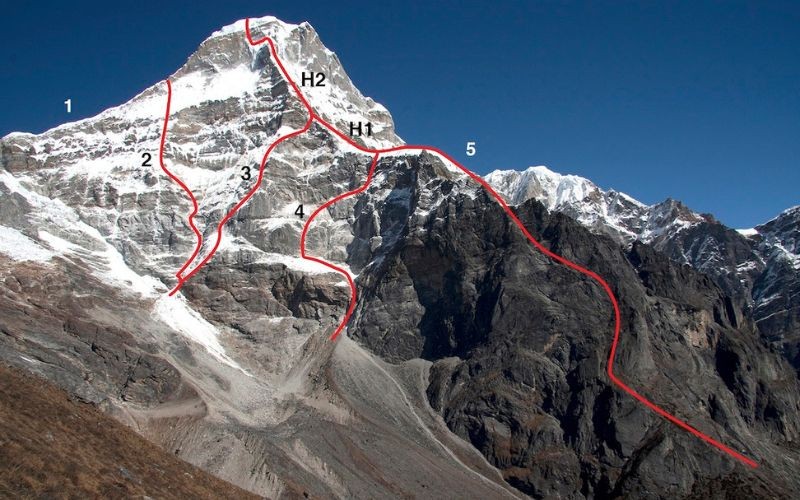
Location and Geographic Setting
Mount Kyashar falls within Makalu Barun National Park, one of Nepal’s most ecologically diverse conservation areas.
The mountain rises above the upper Hinku Valley, not far from the approach route to Mera Peak. From various points on the mountain and its approach, climbers may observe major Himalayan peaks such as Mount Everest, Makalu, and Lhotse, subject to weather and visibility.
The terrain is characterised by:
Climbing Mount Kyashar
Unlike trekking peaks, Kyashar is considered an alpine-style technical peak, requiring prior experience in high-altitude mountaineering.
First Ascent
The mountain was first climbed in 2003 by a Franco-Slovenian expedition, via a route on the southeast face. Since then, recorded ascents have remained limited, and no standard route has been widely established.
Technical Profile
Kyashar is known for:
Expeditions typically establish multiple camps, with summit attempts dependent on snow and weather conditions. It is regarded as a serious, committing climb, not suitable for novice mountaineers.
Access and Approach
The approach follows the Hinku Valley route:
The journey itself traverses forested foothills, alpine pastures, and glacial landscapes.
Wilderness and Isolation
One of Kyashar’s defining attributes is its lack of human presence. Beyond the main Mera Peak trail, the region becomes increasingly remote, with minimal infrastructure and no permanent settlements in the upper valley.
The surrounding ecosystem supports high-altitude wildlife typical of the Makalu Barun region, though sightings are infrequent.
For climbers, this isolation creates an expedition environment that feels genuinely exploratory.
Best Seasons for Ascent
Spring (April-May): More stable conditions with consolidated snow
Autumn (October-November): Clear skies and drier weather
Winter and monsoon periods significantly increase objective risk.
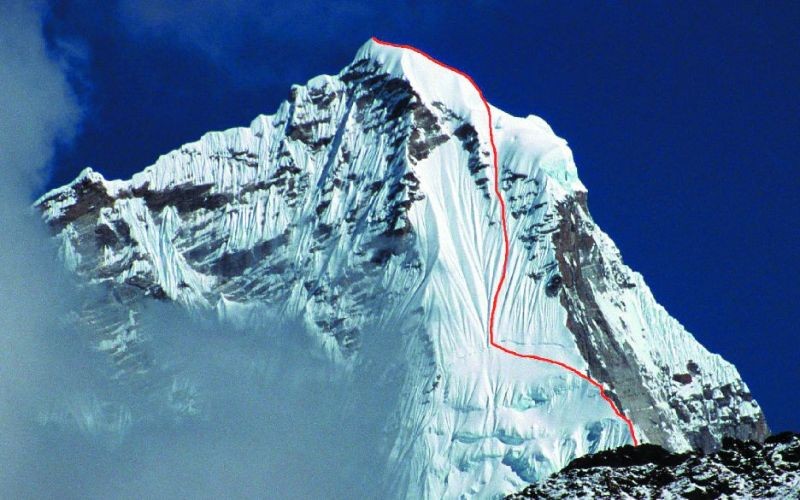
Key Considerations
Mount Kyashar requires careful preparation:
This is a mountain suited to experienced alpinists, not commercial trekking groups.
In a region defined by globally recognised peaks, Kyashar offers something increasingly uncommon: genuine mountaineering solitude.
With few recorded ascents and no heavily commercialised routes, it remains a mountain where climbers must rely on skill, judgement, and adaptability.
Mount Kyashar does not seek attention, and perhaps that is its greatest appeal. It stands as a quiet, demanding objective within the Himalaya, offering a level of challenge and isolation that is becoming increasingly rare.
For those prepared to venture beyond established routes, it represents the enduring spirit of Himalayan alpinism.
PC: AAC Publications, Himalayan Wonders, the Himalayan Club
Also Read