High in Nepal’s trans-Himalayan valleys where barley struggles against altitude and rice will not gro, buckwheat has sustained communities for centuries. Hardy, fast-growing and nutritionally dense, this ancient grain is far more than subsistence; it embodies ritual, identity and resilience woven into mountain life. Across Mustang, Manang and Dolpo, buckwheat shapes both landscape and livelihood.
A Grain Suited to Altitude
Buckwheat thrives between 2,500 and 4,000 metres, tolerating poor soils, short growing seasons and cold alpine nights. In Upper Mustang and the rain-shadow regions north of the Annapurna range, it remains one of the most dependable crops.
Though technically a pseudocereal rather than a true grain, buckwheat functions as a staple in Himalayan diets. Its short cultivation cycle enables farmers to harvest before early frosts, making it indispensable within high-altitude agrarian systems.
In Mustang and Manang, terraced hillsides briefly blush pink and white during flowering season: a fleeting yet striking spectacle for trekkers traversing these highland trails.

Culinary Traditions: From Field to Hearth
Buckwheat’s versatility in the kitchen is central to its cultural endurance.
Dhido
Perhaps Nepal’s most emblematic highland dish, dhido is prepared by steadily stirring buckwheat flour into boiling water until it forms a dense, smooth mass. Traditionally eaten by hand, it is served with gundruk (fermented greens), lentils or local meat curries. In mountain districts, buckwheat dhido is favoured over maize or millet for its warming qualities and sustained energy release which is essential in physically demanding environments.
Buckwheat Tortilla (Roti)
In Mustang and Dolpo, thin buckwheat flatbreads are cooked on iron griddles. Slightly nutty and substantial, they are typically accompanied by yak butter, local cheeses or dried meat.
Pancakes and Festival Foods
During harvest periods and communal gatherings, buckwheat is transformed into pancakes and celebratory dishes, often paired with locally brewed beverages, reinforcing its role in both sustenance and social cohesion.

Buckwheat in Mustang: A Living Landscape
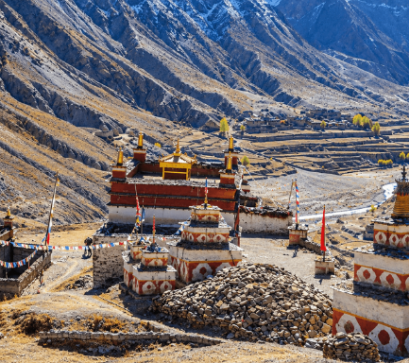
In the windswept valleys of Upper Mustang, buckwheat fields punctuate the arid terrain with seasonal colour and remain central to Thakali and Loba culinary traditions, particularly in settlements such as Lo Manthang. Along trekking routes, local lodges increasingly feature buckwheat-based dishes, offering travellers a direct connection to the region’s agricultural heritage. Sown in late spring and harvested before autumn frosts, the first harvest is often accompanied by offerings to household deities and ancestral spirits, reflecting the interdependence of land, labour and divine protection.
Buckwheat also appears in seasonal feasts, highlighting its cultural role beyond daily sustenance. Naturally gluten-free and rich in fibre, antioxidants and essential amino acids, it has gained global attention in contemporary Kathmandu cuisine from pancakes to noodles and artisanal breads, yet in remote Himalayan villages it remains a resilient, low-water crop vital for food security, preserving indigenous seed varieties and sustaining generations of traditional farming knowledge.
Experiencing Buckwheat as a Traveller
For those trekking through Mustang, Dolpo or Manang, tasting buckwheat dishes offers more than sustenance, it is a direct encounter with Himalayan adaptation.
Look for:

To engage with these foods is to understand how geography shapes cuisine in Nepal’s highlands and how a modest mountain grain continues to anchor culture, climate resilience and community life.
PC: Wikimedia Commons
Also Read