

 Source::AP news
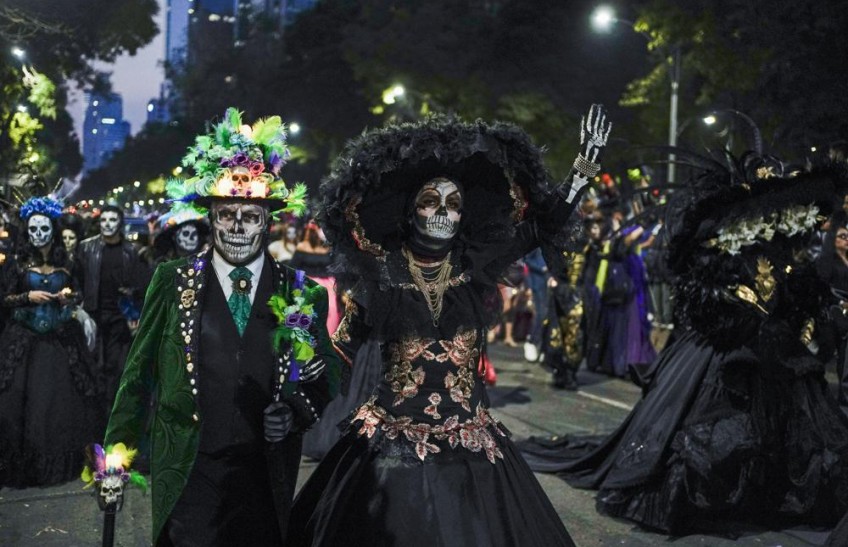
Streets are lined with marigolds as loud music plays. Both adults and kids dress as skeletons and take pictures to document the yearly, happy celebrations. It is thought that they can communicate with their departed loved ones on the Day of the Dead, also known as Dia de Muertos.
Today, skeletons are central to Day of the Dead celebrations, symbolizing a return of the bones to the living world. Like seeds planted under soil, the dead disappear temporarily only to return each year like the annual harvest.
Altars are core to the observance as well. Families place photographs of their ancestors on their home altars, which include decorations cut out of paper and candles. Traditional altars can be adorned in a pattern representative of a Mesoamerican view that the world had levels. But not everyone follows or knows this method.
Typically, it is an intimate family tradition observed with home altars and visits to local cemeteries to decorate graves with flowers and sugar skulls. They bring their deceased loved ones’ favorite food and hire musicians to perform their favorite songs.
“No one knows when the first observance took place, but it is rooted in agriculture, related beliefs from Mexico’s pre-Hispanic era. Catholic traditions were incorporated into the celebration after the Spanish conquest in 1521.” Said Andrés Medina, a researcher at the Anthropological Research Institute of the National Autonomous University of Mexico.
“Nowadays there’s an influence of American Halloween in the celebration. These elements carry a new meaning in the context of the original meaning of the festival, which is to celebrate the dead. To celebrate life.” Said Medina.
“I love this tradition because it reminds me that they (the dead) are still among us. Sometimes I feel like crying. Our altars show who we are. We are very traditional and we love to feel that they (the dead) will be with us at least once a year,” said Paola Valencia._AP news
Also Read
