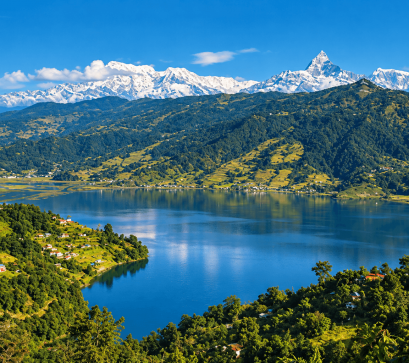
Most visitors to Pokhara linger by Phewa Lake, unaware that just a short ride northwest lies a corridor holding one of Nepal's most moving stories of exile and endurance. The road to Hemja, about 5 kilometers from the city center, leads to Tashi Palkhel, the oldest of Pokhara's four Tibetan refugee settlements, and a living fragment of a homeland many residents have never seen.
Tashi Palkhel traces its origins to 1962, three years after the Dalai Lama's escape to India following the 1959 uprising in Tibet. Thousands of Tibetans crossed the Himalayas into Nepal, and a group of them settled along the Seti Gandaki valley, building a community modeled on the villages they had left behind.
Today the settlement houses several thousand residents, sustained in part by carpet weaving, tailoring, and the sale of handicrafts to visitors trades that became lifelines when formal citizenship and employment rights remained out of reach.
Direct from Dubai to Pokhara Starting Sept 23, 2026. Be among the first to fly non-stop with flydubai. Book Your Seat Now.
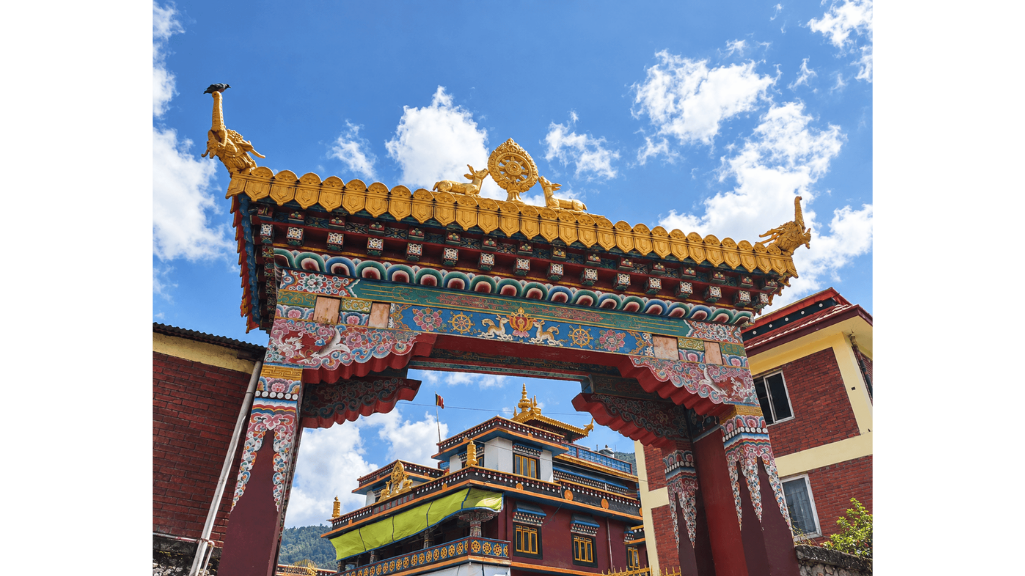
At the center of Tashi Palkhel stands Jangchub Choeling Monastery, founded in 1967 with the Dalai Lama's blessing and home to roughly 200 monks of the Karma Kagyu lineage. Its shrine hall is richly decorated with murals depicting the life of the Buddha, and it houses a large gilded statue of Buddha Sakyamuni along with an extensive collection of sacred texts.
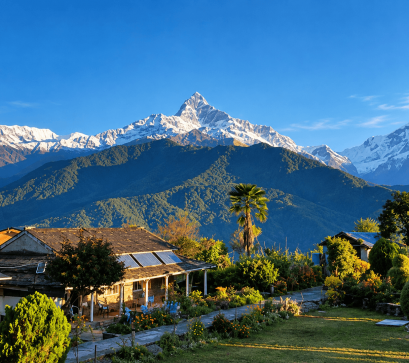
The attached Vikrama Shila Buddhist Institute trains young monks in philosophy, ritual, and Tibetan language ensuring the tradition continues with each generation. Visitors who arrive in the afternoon may catch the sound of chanting and ritual horns during puja, or spot monks debating in the courtyard beneath views of the Annapurna range.
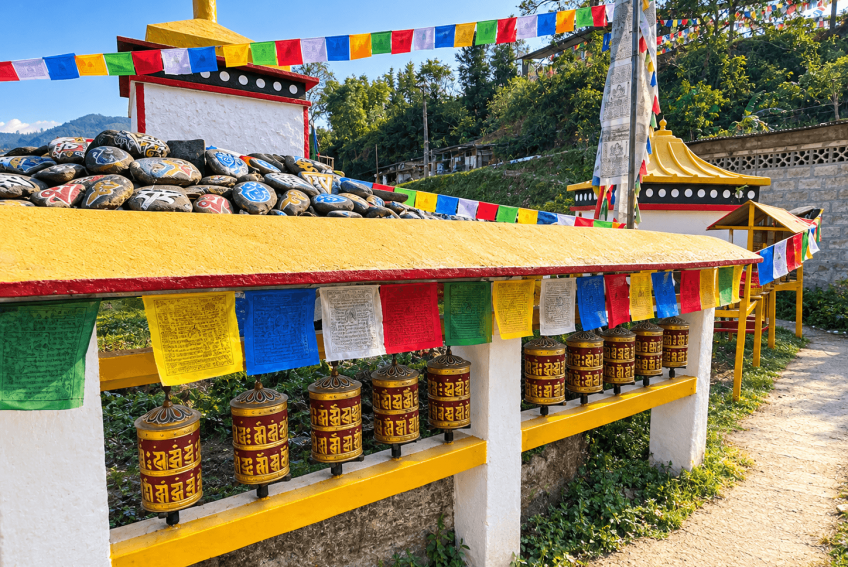
Nearby, the Pema Ts'al Sakya Monastic Institute offers a quieter counterpart, a large campus where more than a hundred young monks pursue textual study against a backdrop of mountain scenery. Together, the two institutions form a kind of monastic axis, linked by prayer-flag-lined lanes, mani walls, and chortens that give the corridor its unmistakably Tibetan character.
Beyond spirituality, the route reveals a working community: artisans hand-knotting wool carpets, painters rendering intricate thangkas, and small restaurants serving momos, thukpa, and butter tea. Elderly residents often spend their days spinning prayer wheels or recounting, to anyone willing to listen, the story of crossing the mountains decades ago.
The settlement is reachable by local bus via Hari Chowk, or by a short taxi ride from Lakeside. Visitors are encouraged to walk clockwise around stupas, remove footwear before entering shrine halls, dress modestly, and ask permission before photographing monks or residents small courtesies that honor a community still writing its story in exile.