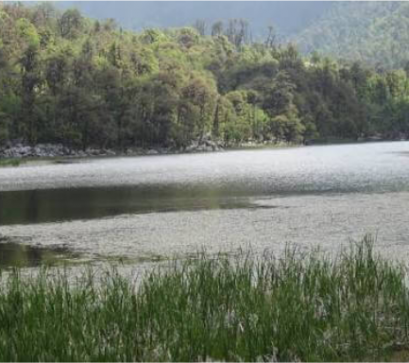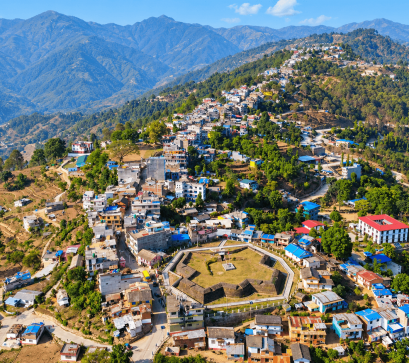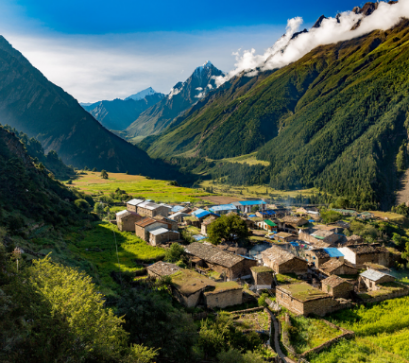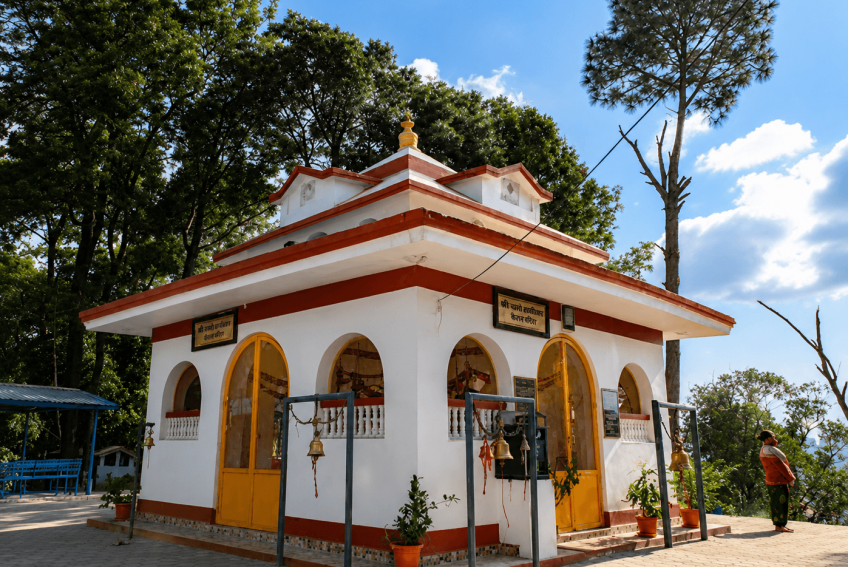
Situated in the hills of Sano Hattiban forest, Ward No. 23, Lalitpur, the Kirat Manghim is more than a temple; it's a living record of the Kirat people's bond with nature and ancestry. The Karmanasa River flows to its east, while the Mahadev River is said to have once run along its western edge.
Before chemical fertilizers, farmers from Gwarko, Baafal, Bhelpa, and Khumaltar used the forest's rich black soil to fertilize their fields, a practice that continued until around 2020 B.S. (~1963–64 A.D.). Its steady extraction is believed to have shaped the depression that became the Mahadev River. The name "Hattiban" (elephant forest) likely comes from the area's broad, elephant-like shape.
Long used mainly for grazing and firewood, the forest nearly vanished. Local Chhetri communities performed an annual ban puja (forest worship) each Asar, while the Kirat community held land-worship ceremonies on full moon days of Baisakh and Mansir. As Kathmandu and Lalitpur urbanized, the forest's survival was further threatened.
After 2007 B.S., deforestation left the site deserted until around 2012 B.S., when King Mahendra learned of its significance as a Kirat pilgrimage site and called for its protection, spurring government-backed conservation. Recognizing the risk of losing the site entirely, the community later built the Kirat Manghim. After 2058 B.S., the area was officially renamed Kirat Dharmik Ban ("Kirat Religious Forest").
In Limbu, "Maang" means deity and "Him" means home so Kirat Manghim means "home of the Kirat deities." Kirat tradition centers on nature worship rather than idols, which is why the temple sits within the forest itself.
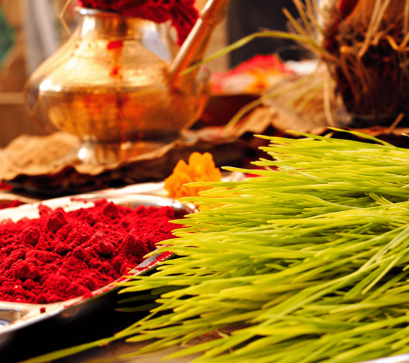
The nine-storey Devasan, or "Sangbe," was built after 2037 B.S., beginning regular daily worship. Each day, a Limbu priest tends an urn representing "Yuma" (Mother/Goddess Parbati), refreshing its water and adding sacred grass, herbs, and flowers, followed by evening Arati.
The temple follows a Pagoda-style design, topped with a copper vessel ("Tamako Gagri") symbolizing Yuma. Inside, different Kirat groups maintain separate Devasanas: the Limbu worship the central nine-storey Sangbe, the Yakha worship beside it, the Rai honor an ancestral mud stove (Chulho), and the Sunuwar have their own shrine behind the main structure preserving each group's distinct traditions under one roof.
Predating the temple, Yakwa Puja (before planting) and Chasok Puja (after harvest) trace back to 1905 B.S. Originally performed with river stones representing deities, these rituals sought ancestral blessings for good weather and harvests, with contributions of money, rice, or chickens reinforcing communal unity. Today, they remain central to Kirat agricultural and spiritual life.
Active during festivals like Ubhuali, Udhauli, Chandi Purnima, and Mansir Purnima, the Kirat Manghim remains a rare forested sanctuary in the fast-urbanizing valley where devotion, culture, and nature endure together.