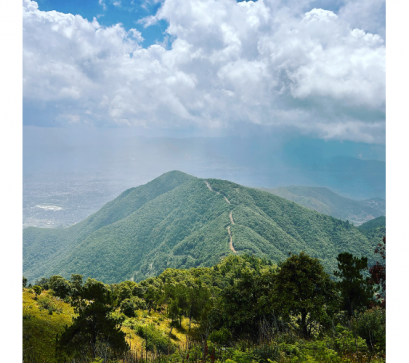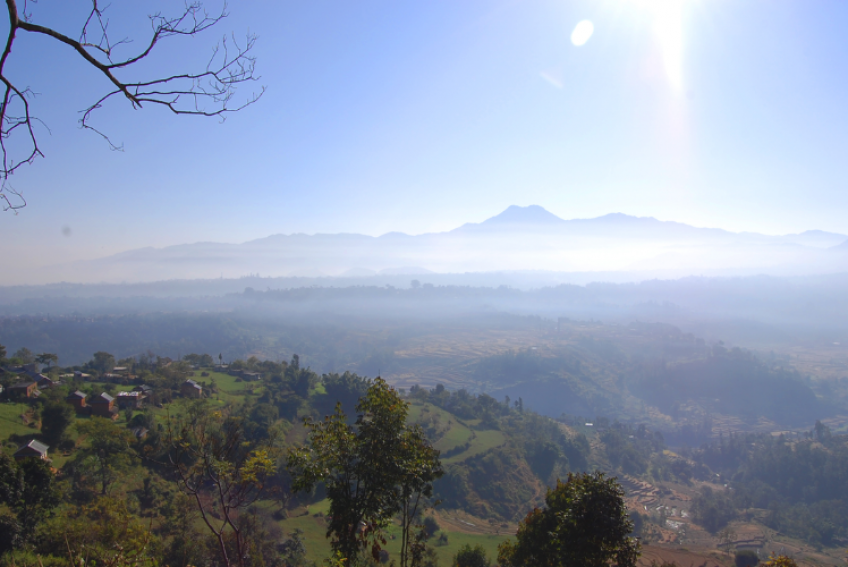
There is a hill on the southeastern edge of Kathmandu Valley that most people in the city have seen without ever truly seeing. On clear mornings — those rare, light-washed mornings after the monsoon rain has scrubbed the sky — a dark forested ridge rises above the smog line and holds itself apart from the valley’s noise. That ridge is Phulchowki. At 2,762 metres, it is the tallest point on the rim of the Kathmandu Valley, and it rewards the few people who make the climb with something the city below cannot offer: silence, cloud, and the knowledge that you are standing in one of the most biologically dense forests in Nepal’s mid-hills.
Phulchowki’s name translates, loosely, as “the place where flowers bloom.” It is not a romantic exaggeration. The hill’s forest is a living catalogue of species that have no business existing this close to a capital city of four million people. Botanists have documented over 100 species of orchid alone within its boundaries — a figure that continues to be revised upward with each new survey. Among them are species so habitat-specific that they grow on a handful of trees on a single ridge, flowering for three weeks a year and disappearing back into the canopy as if they were never there.
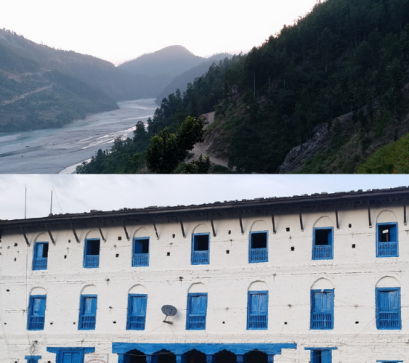
Phulchowki sits roughly 20 kilometres southeast of central Kathmandu, beyond the suburb of Godavari. The most common approach is via Godavari itself — a town already known for its botanical garden and natural springs — from which a rough road climbs the hill for approximately 12 kilometres to the summit. Walking up would be the safer and more reliable option for the Phulchowki hike in the monsoon season.
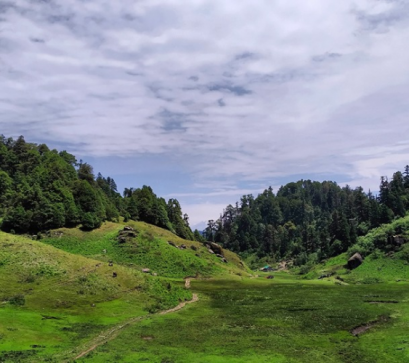
The drive up, when the road is passable, passes through increasingly dense forest that changes character almost visibly as you gain altitude: the subtropical broadleaf zone gives way to temperate oak and rhododendron, and the air cools by the time you reach the upper switchbacks. Most visitors who walk take between four and six hours to reach the top, depending on the path taken and the frequency of stops.
It is worth stopping often.
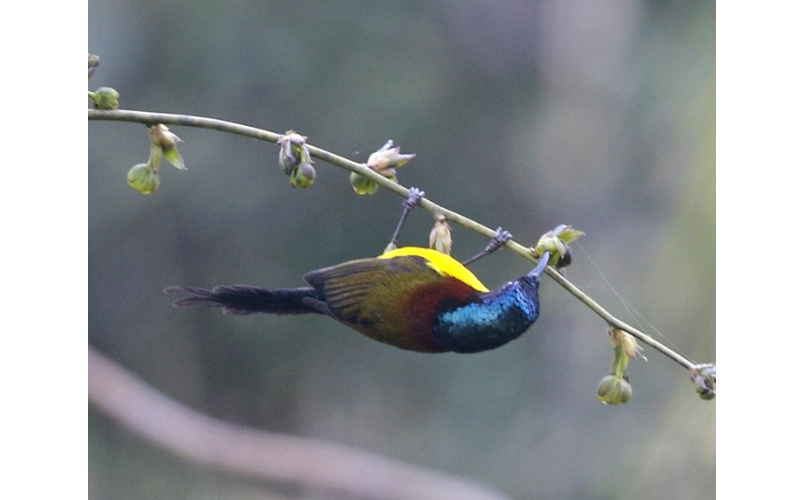
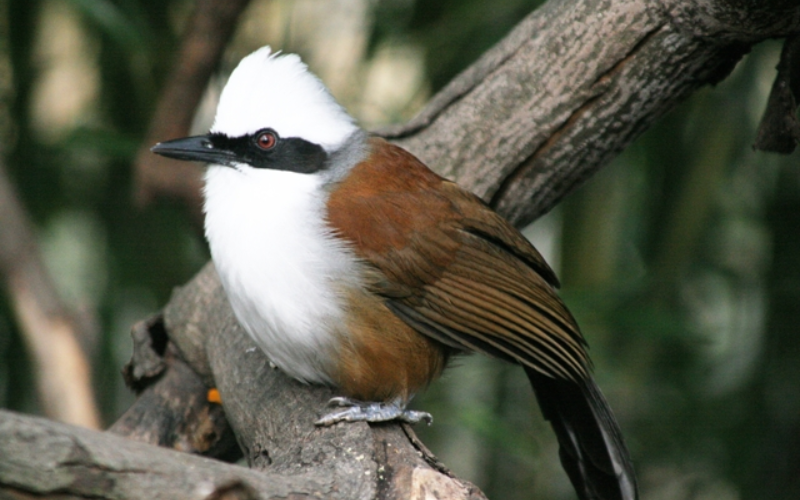
What makes Phulchowki genuinely, scientifically extraordinary is the concentration of endemic and rare flora packed into a relatively compact area. The hill is considered one of the best birding sites in all of Nepal, with over 280 bird species recorded across its slopes.
During spring, Phulchowki Hill serves as a crucial habitat for immigrating warblers, flycatchers, and cuckoos. The onset of monsoon during June brings lush foliage and increase in bird activity. Resident species like the Spiny Babbler, the Khalij Pheasant, variants of Laughingthrushes (तोरीगाँडा), the Mountain Hawk-Eagle, the Blue-winged Minla, and several others are active in this area during this season.
But it is the orchids that have begun drawing a particular kind of visitor: botanists, conservation photographers, and plant enthusiasts making dedicated trips not just from Kathmandu but from abroad.
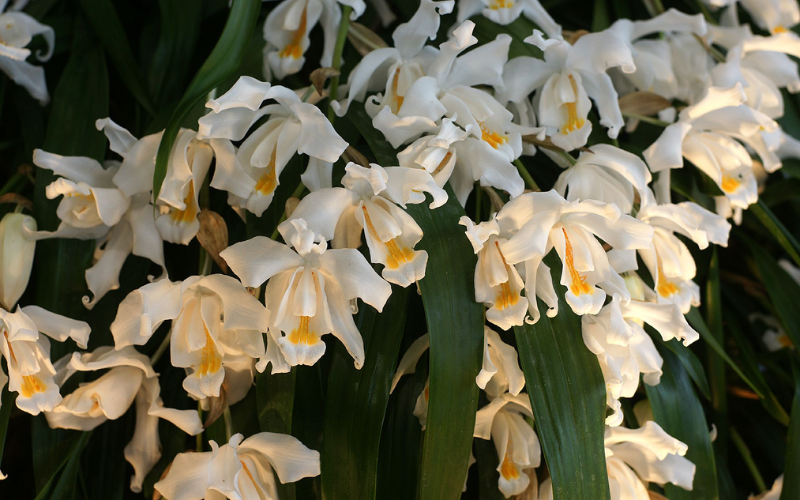
The species most associated with Phulchowki’s upper reaches is Coelogyne cristata, a cool-weather orchid that produces clusters of white flowers with yellow-crested lips and blooms between January and March on the mossy trunks of oak and rhododendron trees. It is found elsewhere in the Himalayan foothills, but Phulchowki’s population is among the most accessible to observers, growing at altitudes reachable in a single day’s walk from the valley floor. Other orchid genera present on the hill include Dendrobium, Bulbophyllum, and Pleione — the last a particularly striking genus of ground orchids that can carpet forest clearings in purple during post-monsoon weeks.
The forests here also shelter communities of Himalayan black bear, leopard, and barking deer — a reminder that Phulchowki, despite its proximity to the capital, functions as a genuine wildlife corridor. While bird sightings are regularly reported, sightings of larger mammals are rare and mostly restricted to the denser western slopes.
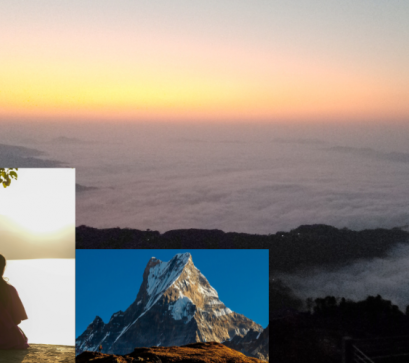
The top of Phulchowki is marked by a small shrine and, more practically, a telecommunications tower. Neither diminishes the view. On a clear day — which in winter can mean crisp visibility from Everest to Dhaulagiri — the entire arc of the Himalayan range spreads across the northern horizon with an intimacy that surprises visitors expecting something more distant. The valley below looks like a model of itself: small, ringed, contained.
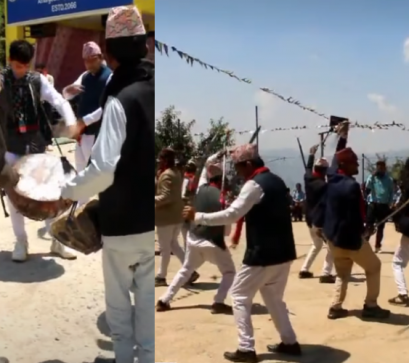
The shrine at the summit is dedicated to Phulchowki Mai, a goddess associated with the forest and its abundance. Locals from the villages on Phulchowki’s lower slopes have long maintained a relationship with this forest not as a destination but as a source — of firewood, of medicinal plants, of water. Understanding that relationship is part of understanding what this hill actually is.
What to Know Before You Go
Phulchowki is accessible year-round but rewards different seasons in different ways. Winter brings the orchids and the clear-sky views. Spring brings rhododendron bloom and migrating birds. The monsoon cloaks the forest in mist and produces waterfalls on the lower slopes that are otherwise dry. Autumn brings the clearest post-rain light and the widest views.
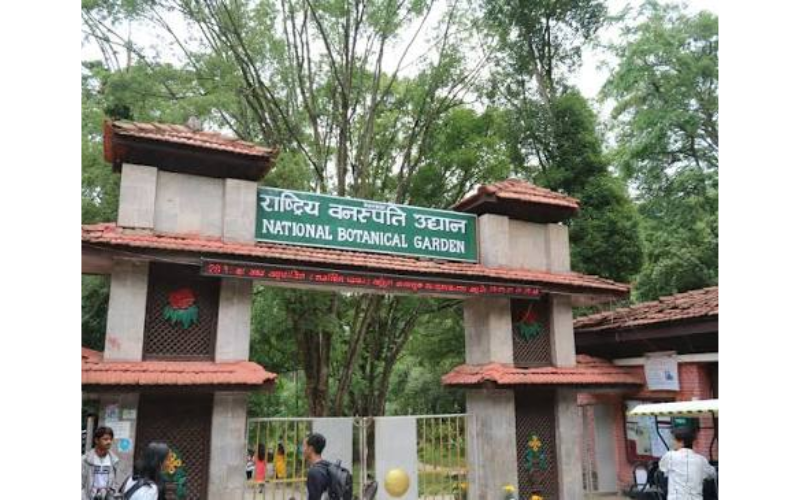
The nominal entry fee to Phulchowki is Rs, 30 per person for Nepali citizens, and Rs. 100 per person for foreign nationals, that is to be paid at the National Botanical Garden gate. No additional permits are required to hike up to the peak once you are past the garden entrance.
Carry warm layers even in summer — the summit is reliably 8–10 degrees cooler than the valley floor, and cloud cover arrives fast. Start early. The morning light on the upper forest, when fog drifts between the oak trunks and the mossy boughs are backlit, is one of those sights that is genuinely difficult to describe without sounding like you are overstating it.
You are not.
Picture Credits: Wikimedia Commons