Most visitors to Nepal never reach Sudurpashchim Province. The country's westernmost region sits at the far end of every logistical chain — beyond the last well-maintained road, beyond the tourist infrastructure that concentrates so heavily in Kathmandu, Pokhara, and the trekking corridors of the east and center.
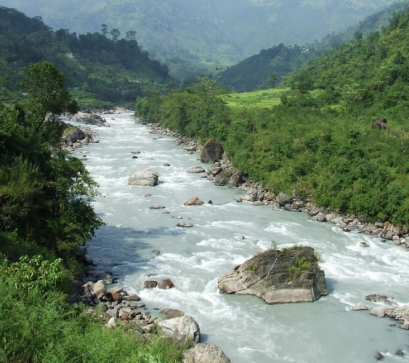
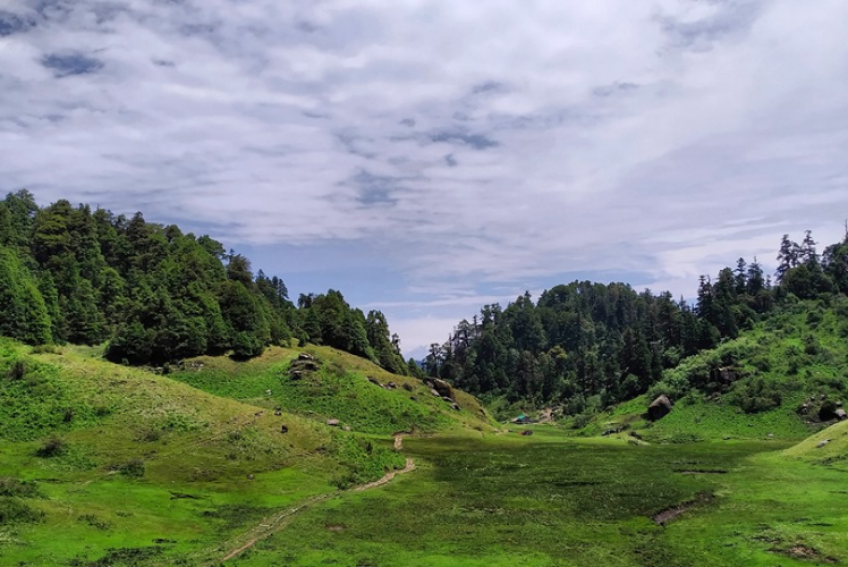
For those who do make it, the terrain is immediately humbling: deep river gorges, ridge after ridge folding away toward the horizon, and a quiet that has nothing to do with emptiness and everything to do with distance. Into this landscape, the Khaptad plateau arrives as something close to a geographical anomaly — a broad, open expanse of rolling grassland and mixed forest sitting at roughly 3,300 meters, spread across approximately 225 square kilometers, and unlike almost anything else in Nepal's mid-hills.
Formally gazetted as Khaptad National Park in 1984, the plateau is one of Nepal's earlier protected areas and, by almost any measure, one of its least visited. The park encompasses a terrain that shifts dramatically with elevation — subtropical forest in the lower reaches, dense stands of oak and rhododendron in the mid-sections, and the wide open plateau at the top, threaded with small rivers and dotted with wetlands that fill with wildflowers as the monsoon retreats. It is a landscape that rewards patience and punishes hurry: the plateau reveals itself slowly, in layers of ecology and geography that a one-day visit cannot fully absorb.
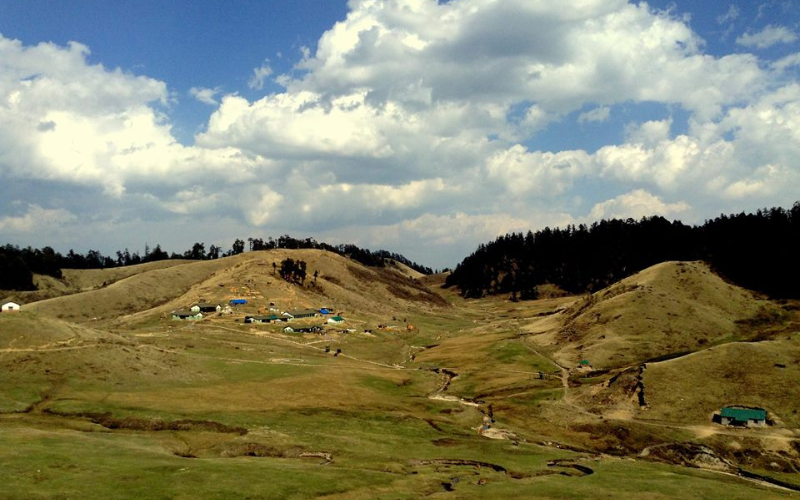
The Khaptad plateau is one of the few places in Nepal's mid-hills where you can walk for a full day across open grassland, surrounded by forest, and encounter no road, no settlement, and no other trekker.
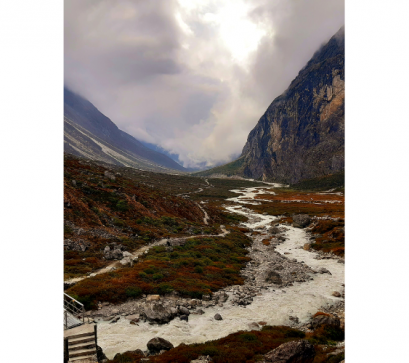
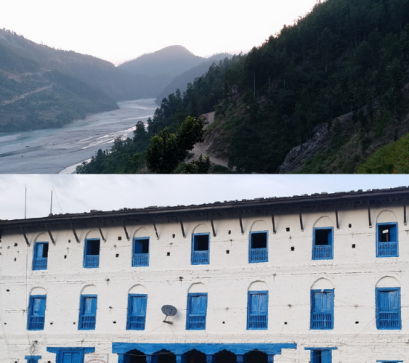
To appreciate what Khaptad offers, it helps to understand the landscape that surrounds it. Sudurpashchim Province — Nepal's far west — is defined by a topography of extremes. The Mahakali, Seti, Karnali, and Budhiganga rivers carve gorges through the middle hills that are among the most dramatic in the country, while the ridgelines between them rise steeply and offer little of the plateau-like relief that trekkers in the Annapurna or Mustang regions take for granted. Communities in this region have historically been among the most isolated in Nepal, connected to the wider country by trails rather than roads, and by trade patterns that have changed slowly over centuries. It is a landscape shaped by the logic of the foot — of communities organized around what can be walked to, carried, and grown.
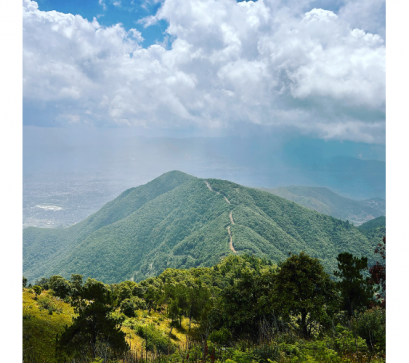
Against this backdrop, the Khaptad plateau is genuinely unusual. Its flatness is not the flatness of a valley floor carved by a river but something more like an upland terrace — a broad shelf of land that sits above the gorge country below and commands long views in multiple directions. On a clear day, the plateau's higher edges reveal sections of the Saipal Himal to the north, while the southern slopes descend through forest toward the districts of Bajhang and Doti. The sense of elevation without enclosure — of being high without being hemmed in — is rare in a country whose mountains are more often experienced as walls than as open horizons.
The ecological character of Khaptad is defined by its position in Nepal's mid-hills transition zone — a belt of terrain that sits between the subtropical lowlands and the high alpine environments of the greater Himalayan range. This transition zone is, in botanical terms, exceptionally rich.
The park's lower forests carry species more commonly associated with the hills of Nepal's central and eastern regions: sal, chilaune, and various oak species form a canopy that filters the light into patterns of green and shadow that change completely with the season. Higher up, the rhododendron and birch forests that characterize Nepal's mid-altitude zones take over, and in spring these slopes bloom in the same crimson and pink that draws trekkers to the Everest and Annapurna regions — but here, without the foot traffic, the display can feel entirely private.
The plateau grasslands themselves are among the park's most ecologically distinctive features. Unlike the alpine meadows of Nepal's higher parks, which are accessible only to well-acclimatized trekkers, the Khaptad grasslands sit at an elevation that most reasonably fit visitors can reach without technical preparation. They are broad enough to walk for hours without retracing steps, and varied enough — with patches of dense shrub, stands of forest, and the small rivers and wetlands that thread through the lower sections — to hold the attention of naturalists across multiple visits. The Khaptad Daha, a small lake near the center of the plateau, anchors the landscape and serves as a focal point for the wildlife that the park supports.
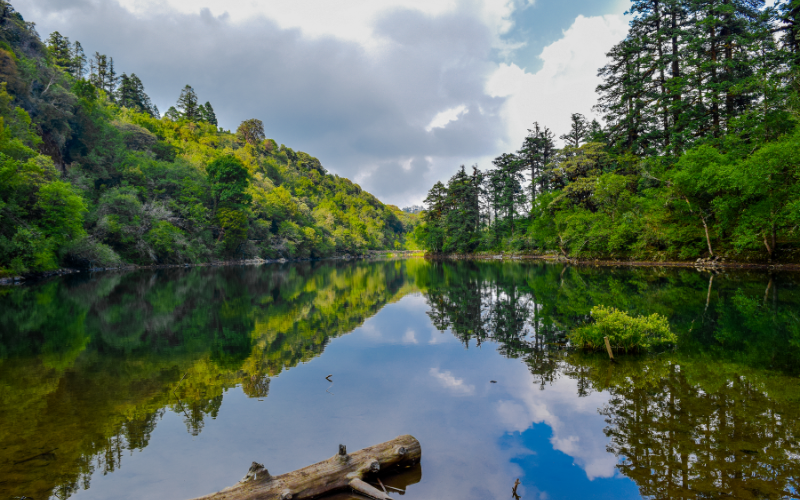
One of the least-publicized aspects of Khaptad's ecological significance is the density and variety of its medicinal plant populations. The park's combination of altitude range, soil diversity, and relatively undisturbed habitat has produced conditions in which plants with recognized therapeutic properties grow in unusual abundance.
Local communities in the surrounding districts have maintained detailed knowledge of these plants across generations — knowledge of where particular species grow, at what time of year they are most potent, how they should be prepared, and what conditions they address. This body of knowledge, transmitted through practice and observation rather than written records, represents a form of botanical expertise that formal science is only beginning to document systematically.
The park has sometimes been called a living pharmacy in literature produced by Nepali conservation bodies — a description that is accurate enough in its core claim, if slightly reductive in its framing. The plants themselves are not simply waiting to be catalogued and extracted; they exist within an ecology and a human knowledge system that treats them as part of a living whole. The challenge for conservation in Khaptad, as in many of Nepal's protected areas, is to maintain the ecological conditions that allow these plants to persist while also respecting the rights and knowledge of the communities whose relationship with the landscape long precedes any national park boundary.
The animal life of Khaptad is one of the park's most compelling arguments for the attention it has not yet received. The combination of dense forest, open grassland, wetland habitat, and genuinely low human pressure has created conditions in which a range of species can persist that are under increasing stress across Nepal's more accessible mid-hill landscapes. Leopard are present in the park and thought to maintain a viable population — a significant finding given how rapidly leopard habitat is being reduced across the mid-hills by agriculture, settlement, and the fragmentation of forest cover. The Khaptad forest provides both the cover and the prey base that leopard require, and the park's buffer zones help to reduce the conflict with livestock-keeping communities that typically drives leopard persecution elsewhere.
Himalayan black bear are also resident in the park, and their presence shapes the experience of walking through the forest in ways that keep the visitor alert. These are not animals that need to be sought out — an encounter is always a possibility, and the awareness of this sharpens the attention in the way that only the presence of large mammals can. Red panda have been recorded in the park's forest zones, though their nocturnal habits and dense-cover preference make sightings uncommon. The park's bird life, documented at over 270 species, reflects the distinct ecological character of far-western Nepal — a region whose avian populations are shaped by the convergence of the upper Karnali drainage, the mid-hill forests, and the seasonal movements of species that use the Himalayan foothills as a corridor between lowland and high-altitude habitats.
What makes the wildlife picture at Khaptad particularly interesting is how incomplete it remains. Systematic survey work in far-western Nepal has historically received far less funding and scientific attention than equivalent efforts in the Everest and Annapurna regions, where international trekking interest has created both demand for ecological information and resources to gather it. The species counts at Khaptad are almost certainly underestimates — products of limited survey effort rather than limited biodiversity. Conservation research that has begun in recent years suggests that the park may hold populations of species not yet formally recorded there, and that its ecological value extends well beyond what the existing literature captures.
Khaptad changes more dramatically with the season than most of Nepal's well-known parks. In the winter months, snow covers the upper plateau and the park falls into a deep quiet — the few communities that use the high grasslands for summer grazing have long since descended to lower elevations, and the landscape belongs almost entirely to the animals that have adapted to remain through the cold. This is the season in which the leopard's tracks are most visible in the snow, and in which the forest carries a stripped-back clarity that the dense growth of the warmer months conceals.
Spring brings the rhododendron bloom to the forest edges and the gradual return of the plateau's grassland ecology as snow retreats. The wildflowers that emerge across the meadows in April and May — primrose, gentian, orchid, and dozens of less-familiar species — represent one of the park's least-photographed and most genuinely affecting spectacles. The monsoon months transform the plateau again: the grasses grow thick and tall, the rivers run full, the forest becomes dense with moisture, and the birdlife peaks as both resident species breed and migrating individuals pass through. The post-monsoon season — October through November — brings the clearest skies and the most settled walking conditions, and is the period most recommended for visitors making the journey to the park for the first time.
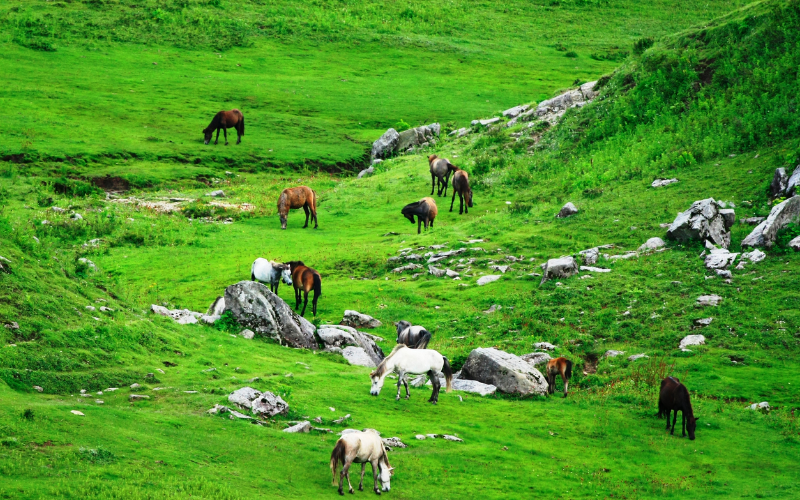
The logistics of reaching Khaptad are the single greatest barrier to its wider recognition, and also the most important factor in its preservation. The gateway towns of Silgadi-Doti and Chainpur are accessible by flights to Dhangadhi or Bajura — small aircraft serving airstrips that operate subject to weather — followed by road travel and, ultimately, foot. The walk onto the plateau typically takes one to two days from the nearest road head, depending on the entry point and the condition of the trail. There are no luxury lodges on the plateau, no organized trekking infrastructure of the kind that makes Annapurna or Everest base camp accessible to those with money but limited experience.
What exists is simpler: basic guesthouses in the gateway towns, camping on the plateau itself, and the company of a local guide who knows the trails and the ecology in ways that no map fully captures.
This difficulty is not a design flaw. It is the mechanism by which the plateau has remained what it is. Every incremental barrier — the flight to a small airstrip, the road that ends before the park begins, the walk that requires genuine physical commitment — filters out a category of visitor and, in doing so, filters out a category of impact.
The communities surrounding Khaptad are among the most economically marginalized in Nepal, and the park's potential as a source of sustainable income for local guides, porters, and accommodation providers is real and largely unrealized. But realizing that potential without replicating the kind of infrastructure-driven degradation that has affected other Nepali parks is the central challenge — and the central opportunity — that Khaptad presents to Nepal's conservation community in the years ahead.
The plateau at Khaptad asks something of the visitor that most of Nepal's famous destinations do not: it asks for time, physical effort, and a willingness to arrive without a fixed itinerary. What it gives in return is proportionate to what is asked. The grasslands in early morning, before the cloud builds, carry a quality of light and space that the enclosed valleys and crowded trails of the more popular trekking zones cannot replicate. The forest is genuinely wild. The animals leave traces that a careful observer can read. And the distance from everything familiar, which seems initially like a cost, turns out over time to be the most valuable thing the park offers — the rare experience, in a country that receives more visitors each year, of a landscape that has not yet learned to perform itself for an audience.
Also Read