

 Source::Rss
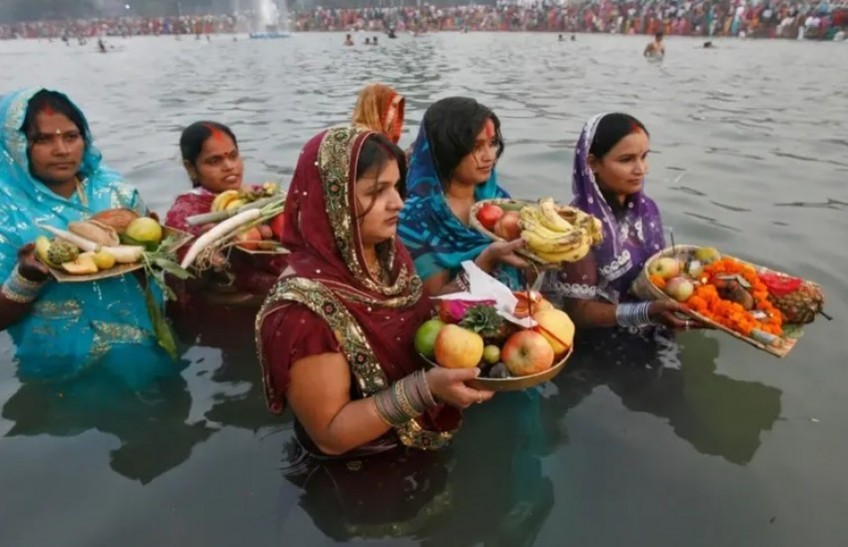
The vibrant spirit of the Chhath festival has swept across the Mithila region, sparking increased activity and enthusiasm among the people as they gear up for the four-day grand celebration dedicated to the 'Sun God.' Commencing today with the ritual of 'Nahay Khay,' devotees have embraced the 'Araba Arabain' method, abstaining from impure foods such as boiled rice, millet, lentils, and meat on the third day of Kartik Shukla.
According to tradition, the fasting period begins on the third day after consuming a regular meal. Throughout the Mithila region, songs resonating with devotion to the Sun God and Chhathi Devi (Goddess) fill the air. As Chhath approaches, ponds and riverbanks with religious significance are adorned like brides.
While it is believed that devotees of any gender can observe fasting during Chhath, women predominantly take part in the rigorous fasting and worship of the Sun God. On this inaugural day of Chhath celebrations, devotees partake in a holy dip and consume only pure food items, committing to a period of dedicated fasting—an observance known as 'Nahay Khay.'
The festival has spurred heightened activity in marketplaces and public spaces, with devotees diligently procuring materials for Chhath celebrations across the Mithila region. Chhath, serving as a common cultural symbol of Tarai/Madhes, is dedicated to the Sun God, symbolizing energy, life force, and prosperity. The festivities span four days, from Kartik Shukla Chaturthi to Kartik Shukla Saptami, according to the lunar calendar.
This year's Chhath festival will culminate on the upcoming Monday with the rising sun. The ritualistic observance involves a holy bath, prolonged fasting, and worship of the sun, accompanied by offerings of prasad and argha (curd) to both the rising and setting sun. Chhath is characterized by a period of abstinence and segregation from the main household for four days, during which the worshiper maintains purity and sleeps on the floor with a single blanket. The culmination of the festival involves prayers to the setting sun, followed by celebrations of the rising sun's glory, symbolizing the cyclical nature of life and death. It is hailed as a sublime form of Sun worship._Rss
Also Read