

 Source::Rss
At a distance of eight kilometers from Khadketari in Syangja on the Siddharth Highway, Bangekot is an important religious pilgrimage site in the region. A gift of nature, this place is located in Panchase Protected Area. This place, which has been in existence since the time of the 20-24th king of Nepal, is a living example of antiquity here.
This place, which is diverse in nature and culture, is important for the Himalayan and mountain scenery. Various routes can be used to reach this place in Fedikhola Rural Municipality-5. Before reaching Bange Maidan, there is Bangekot along Khadketari Panchase rural road. Ranguwa, Bangethum Kalabhairav in Bange village has been considered as Bangekot since ancient times.
The Ranguwa residents of the southern part of Kot call it Ranguwakot. Rajkumar Chhetri, residents of the eastern part of Bhatkhola, Arukhark, and Fedikhola call it Bangekot. The residents of Bange, Bangsing, and Saradi in the northwest part also call it Bangekot. Ghimire village near Bangekot is an ancient settlement here.
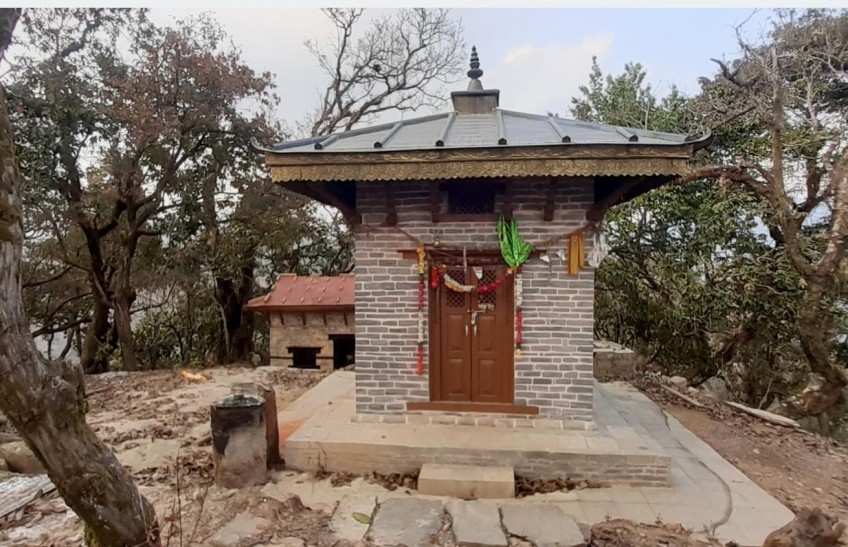
From time immemorial, surrounded by a high wall for security, there is a Bhairavasthan and a priest's house in the middle of this coat, while outside the wall there is a place where sacrifices are made. Legend has it that this coat was made by Rajuta of Arukharka. In ancient times, Katuwal used to broadcast news and astrologers made predictions from this place, where the money raised from mana rice and Birta land was collected for their sustenance.
Twice a year on Badadashain and Chaitedashain, there is a ritual of worship in this Kot, it was customary to bring sacrificial goats, rago and mana ghee from the talukdar chiefs of Rangua, Bange, and Bhatkhola. Previously, as in the Nuwakot Kalabhairav temple, there was a practice of having a priest of the Timalsina type in the Ranguwa Bangethum Kalabhairav place, but now it is not mandatory that the priest should be of the same type in both places.
In Dussein, phulpit is brought from the house of Ranguvali Timalsina, while it is customary to bring curd from the palace of Arukharke Rajouta, but it is customary to bring phulpati as it is. Each caste had a role, and on the Navami day, Aryans used Damai as a bazagaza, Ranguvali Vishwakarma used weapons, and the local Sarki used to take the sacrificial cloth and clean it. In recent times, everyone has been working together to protect and maintain the coat.
Currently, there are newly built temples, buildings and walls, and thick trees in Bangekot. After the abolition of the Birta practice and the abolition of talukdar traditions, the establishment of Akshay Kosh has also contributed to the development of this Kot. The old khunda and khukuri in the coat reflect the antiquity here. Ghanshyam Subedi, chairman of the rural municipality, said that Fedikhola Rural Municipality has given priority to the development of Bangekot, a center of religious, natural, and tourist attractions.
The temple damaged by the 2072 earthquake is being rebuilt with the help of the archeology department. To highlight the importance of Bangekot, promotional programs of tourism-related organizations are continuing with the activism of local youth. Hikers Club Nepal, which has been promoting Pokhara and surrounding tourist destinations through hiking, is going to conduct a hike in Bangekot on Falgun 27._Rss
photo credit: Naya Page
Also Read