High in the remote north-west of Nepal, cradled within Rara National Park, lies the country’s largest freshwater lake, Rara Lake. At an altitude of 2,990 metres above sea level, this Himalayan jewel is famed not only for its pristine beauty but for its remarkable ability to change colour.
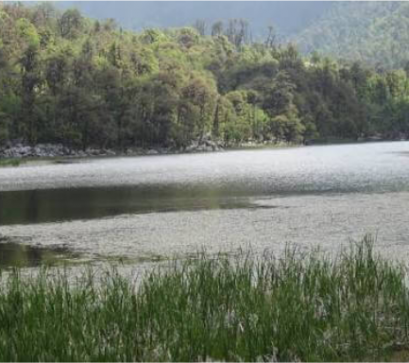
Visitors often describe Rara as shifting from turquoise to emerald green, and at times even silver-grey, all within the span of a single day. But why does Rara Lake change colour? The answer lies in a fascinating interplay of science, altitude, light, and season.
The Role of Light and Reflection
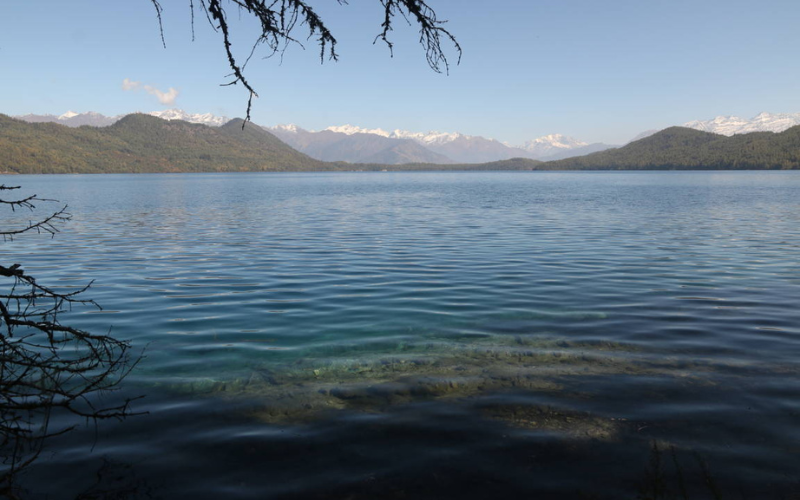
The primary reason Rara Lake changes colour is the way sunlight interacts with its water surface. At high altitudes, sunlight is more intense due to thinner atmospheric layers. This heightened clarity allows the lake to reflect the sky more vividly.
In essence, Rara acts like a natural mirror constantly responding to the sky above it.

Mineral Composition and Water Clarity
Unlike glacial lakes that appear milky due to suspended sediments, Rara Lake is remarkably clear. The absence of heavy sediment allows light to penetrate deeper into the water, where it scatters differently depending on depth and mineral presence.
The lake’s clean freshwater, combined with microscopic aquatic organisms and organic particles, subtly influences how colours are absorbed and reflected. Deeper sections appear darker blue, while shallower edges may appear greener.
Seasonal Changes
Rara’s colour transformations are also seasonal:
Each season offers a distinct visual experience, making Rara Lake a year-round spectacle.

Wind and Surface Movement
Even gentle Himalayan winds can alter how light reflects off the lake’s surface. When calm, the lake becomes mirror-like and intensely blue. When winds ripple the surface, light scatters, softening the colour and creating shifting patterns across the water.
Altitude and Atmospheric Perspective
At nearly 3,000 metres, atmospheric conditions play a crucial role. The thinner air filters less light, intensifying the blue spectrum. This is why high-altitude lakes like Rara appear more vibrant compared to lowland water bodies.
A Living Landscape
Beyond science, Rara’s colour-changing nature is also part of its mystique. Surrounded by alpine forests, distant snow-capped peaks, and dramatic Himalayan skies, the lake exists within a constantly evolving landscape.
Its hues are never static, they are a reflection of time, weather, and season.
For travellers, this means no two visits to Rara Lake are ever the same.

Best Time to Witness Rara Lake’s Changing Colours
For the most striking colour variations:
Clear mornings and late afternoons are particularly magical for photography.
Rara Lake changes colour because it is alive with light, shaped by altitude, clarity, weather, and season. Its shifting palette is not a trick of the eye, but a beautiful demonstration of nature’s physics at work.
For those willing to venture to western Nepal, Rara is not merely a destination, it is an ever-changing canvas painted by the Himalayas.
Also Read