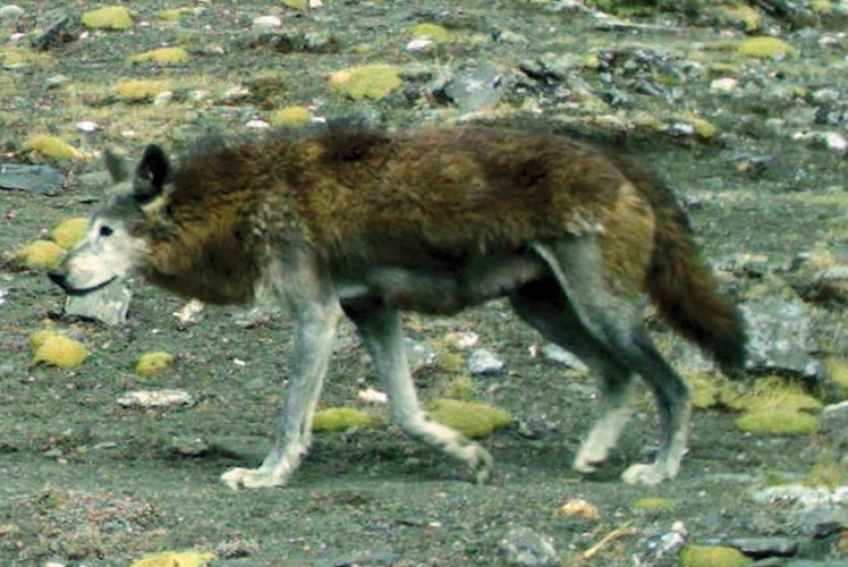
Among Nepal’s rarest wildlife species, Canis lupus chanco, commonly known as the Himalayan grey wolf, stands out as one of the most scientifically significant. Found in the Trans-Himalayan regions of Nepal, this elusive carnivore represents an ancient evolutionary lineage, genetically distinct from other grey wolves of Eurasia.
Unlike its lowland counterparts, the Himalayan wolf has adapted to some of the planet’s most extreme environments, surviving in cold, arid landscapes at elevations exceeding 4,000 metres.
Scientific Discovery and Genetic Significance
Modern understanding of Canis lupus chanco in Nepal was strengthened by non-invasive genetic research conducted in Upper Mustang, within the Annapurna Conservation Area. Studies analysing mitochondrial DNA from faecal samples confirmed the presence of a unique Himalayan wolf haplotype, belonging to a monophyletic clade distinct from both Eurasian grey wolves and domestic dogs.
Subsequent large-scale Himalayan studies corroborated these findings, demonstrating that Himalayan wolves diverged from other wolf lineages hundreds of thousands, possibly over a million years ago. This places Canis lupus chanco among the oldest surviving wolf lineages in the world.

Habitat and Distribution in Nepal
In Nepal, the Himalayan wolf inhabits remote trans-Himalayan landscapes, particularly:
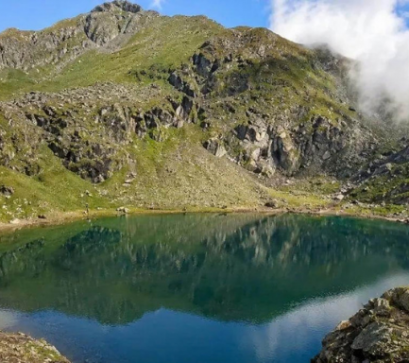
These areas are characterised by barren plateaux, rocky ridgelines and sparse alpine vegetation. Such environments limit human access, contributing to the wolf’s elusive nature and the scarcity of direct sightings.
Behaviour and Ecology
The Himalayan wolf is primarily crepuscular, active during dawn and dusk. It may live solitarily or in small packs, depending on prey availability and terrain. Its diet includes:
As an apex predator, the wolf plays a crucial ecological role by regulating herbivore populations, thereby helping maintain fragile alpine ecosystems.
Conservation Status
The Himalayan wolf has recently been formally assessed by the IUCN Red List in June, 2023 and is classified as Vulnerable, with an estimated 2,275-3,792 mature individuals remaining globally. The population trend is considered declining.
In Nepal, Canis lupus chanco is legally protected, yet its true population size remains uncertain due to limited long-term monitoring and the inaccessibility of its habitat.
Threats to Survival
Despite its resilience, the Himalayan wolf faces mounting pressures:
Because this wolf lineage evolved in extreme high-altitude conditions, rapid environmental change poses a serious risk.

Cultural Perception and Coexistence
In many Himalayan communities, the wolf occupies a complex place in folklore: viewed with both reverence and fear. Traditional pastoral livelihoods often bring humans and wolves into close proximity, making coexistence-based conservation essential.
Conservation Outlook in Nepal
Protecting Canis lupus chanco requires targeted, science-led action:
Preserving the Himalayan wolf means safeguarding not just a species, but an ancient evolutionary legacy deeply tied to Nepal’s high-mountain ecosystems.
The presence of Canis lupus chanco in Nepal reinforces the country’s status as a global biodiversity stronghold. Its survival is a testament to the ecological importance of the Trans-Himalaya; and a reminder that some of the world’s most ancient wildlife still endures in Nepal’s remote mountains.
PC: Wikipedia, Animalia
Also Read