

 Source::AP news
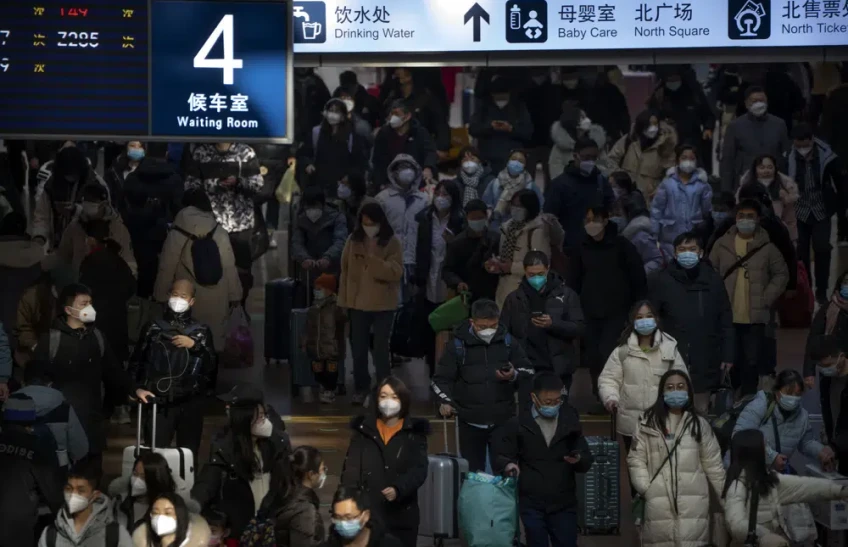
Hairdresser Wang Lidan is making an emotional Lunar New Year journey from Beijing to her hometown in northeastern China — her first in three years after the government lifted its strict “zero-COVID” policy that kept millions of people at home and sparked protests.
The relaxation of restrictions let loose a wave of pent-up travel desire, particularly around China’s most important time for family gatherings. Referred to in China as the Spring Festival, it may be the only time of the year when urban workers return to their hometowns.
The Chinese government expects over 2.1 billion journeys to be made during a 40-day travel period around New Year’s Day, which falls on Sunday.
In December, China abruptly dropped near-daily coronavirus testing and QR code monitoring of residents after public frustration boiled over into protests in Shanghai and other cities. This month, it dropped most remaining restrictions, including the demand that travelers from overseas must go into lengthy and expensive quarantine.
Many local governments had also imposed their own quarantine on travellers from outside the area, and it was those that Wang said had deterred her from leaving Beijing.
With the reopening, everyone is very happy about the Spring Festival because they can reunite with their families. But some of them can't because of work.
While Lunar New Year has also become a popular time to travel overseas, airlines are still only gradually restarting international flights and government departments are just beginning to issue or renew travel documents.
Many countries have imposed testing requirements on travelers from China that the Foreign Ministry has protested, and worries remain about the spread of the virus in China since containment measures were lifted.
"I planned to continue with regular COVID-19 testing and other safety measures as infections surged and patients flooded hospitals following the lifting of restrictions. I do nucleic acid tests every now and then. When I arrive in my hometown, I will surely do a test as a way of self-protection. Otherwise, I won’t know if I’m infected. If I’m infected, I will just isolate myself at home," said Hu Jinyuan, from the eastern province of Shandon, who had managed to return home each year despite the hassles.
“The restrictions are lifted, which made me relaxed. So I think it’s time to go home. If there was an outbreak in Beijing, I would have to be quarantined in my hometown. And when I came back to Beijing, I would be quarantined again,” Wang said before heading into Beijing Train Station for a trip to Heilongjiang province. I would miss the Spring Festival and delay my return to work if I was quarantined twice. So inconvenient!"_APnews
Also Read
