

 Source::AP news
The opening of the International African American Museum in South Carolina marks a significant milestone for descendants of enslaved Africans and serves as a site of homecoming and pilgrimage. Located in Charleston, the museum stands as a tribute to the labor, perseverance, resistance, and cultural contributions of African Americans in shaping the Carolinas, the United States, and the world. With a focus on dialogue and discovery rather than rebuttal, the museum invites visitors to engage with history.
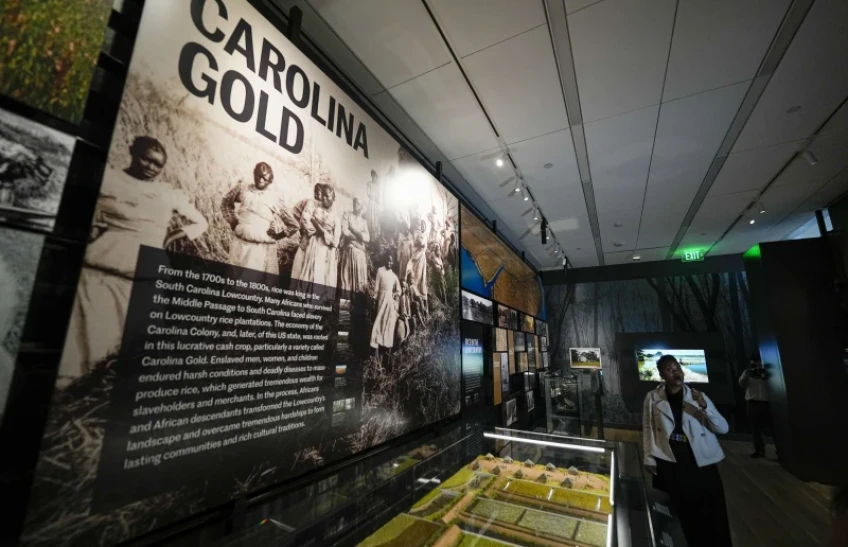
Spread across a sprawling 150,000-square-foot facility, the museum features nine galleries housing interactive exhibits, historical objects, and works of art. One unique aspect is a genealogy research center that aids families in tracing their ancestors' journey from their arrival on American soil. The museum aims to create a courageous and open space that meets visitors where they are and guides them on a transformative journey.
Upon entering, visitors are greeted by large video screens displaying a diasporic journey that spans centuries, from the African continent to the Middle Passage and beyond. The screens beckon visitors toward expansive views of the Charleston harbor, creating a powerful connection to the past.
The museum includes a dedicated gallery showcasing the history and culture of the Gullah Geechee people. These communities, isolated on plantations in coastal South Carolina, Georgia, and North Florida, maintained their West African traditions and creole language despite the harsh conditions. A multimedia "praise house" within the gallery highlights the faith expressions of the Gullah Geechee and their influence on Black American gospel music.
The museum's grand opening was a momentous occasion, featuring renowned figures like actress Phylicia Rashad, poet Nikky Finney, and the McIntosh County Shouters. Former Charleston Mayor Joseph Riley, Jr., who played a pivotal role in the museum's inception, emphasized the importance of truth in understanding and respecting shared history.
The journey to establish the International African American Museum began in 2000, when Mayor Riley proposed its creation. Over the years, the project faced fundraising setbacks and leadership changes, leading to delays in construction. The COVID-19 pandemic and supply chain issues further extended the timeline.
The museum's location near Gadsden's Wharf, where a significant percentage of enslaved Africans first set foot on American soil, sets the tone for the experience. The wharf's hallowed grounds have been transformed into an ancestral garden, with black granite walls inscribed with lines from Maya Angelou's poem "And Still I Rise." The museum's main structure is raised above the wharf, supported by columns, with a shallow fountain beneath, symbolizing the inhumane shackling of enslaved individuals during the transatlantic slave trade.
The museum's landscape, designed by Walter Hood of Hood Design Studios, draws inspiration from the Lowcountry and its former plantations. It aims to showcase how the botany of enslaved Africans and their descendants has shaped the region's flora. The lush grounds, winding paths, and seating areas create an ethnobotanical garden, highlighting the ongoing impact of African contributions in the Carolinas.
The International African American Museum joins a growing array of institutions dedicated to educating the public about the Black experience in America. From the National Museum of African American History and Culture in Washington, D.C., to lesser-known Afrocentric museums across the country, these institutions aim to shed light on underdiscussed aspects of American history.
The museum has also taken steps to engage with school districts, particularly in areas where laws limit discussions of race and racism. Despite South Carolina's ban on teaching critical race theory in public schools, the museum remains accessible for local schools, which have already expressed interest in visiting.
When the doors officially open, the museum aims to provide visitors with a comprehensive understanding of the Black American story. By honoring untold stories at a sacred site, the museum encapsulates the essence of the African American journey and fulfills its mission to educate and inspire._APnews
Also Read