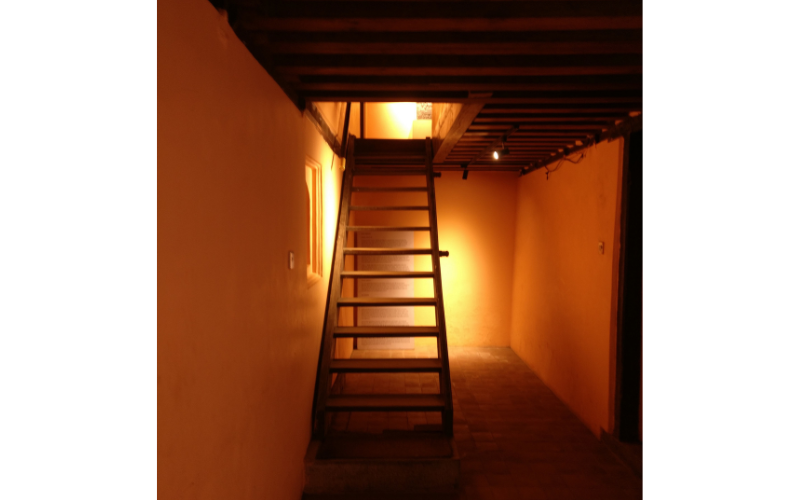
In the old houses of the Kathmandu Valley, stairs are not just structures, they are narrow wooden thresholds between lives stacked vertically. Steep, creaking, and often dimly lit, they connect kitchens, prayer rooms, sleeping spaces, and courtyards in a quiet choreography of movement.
And somewhere within that choreography, a voice is always heard.
“Binaabi.”
It is spoken softly, almost instinctively, just before someone descends/ascends a staircase in a traditional Newa home. The sound is brief, unremarkable to outsiders, but within it lies an entire philosophy of living.
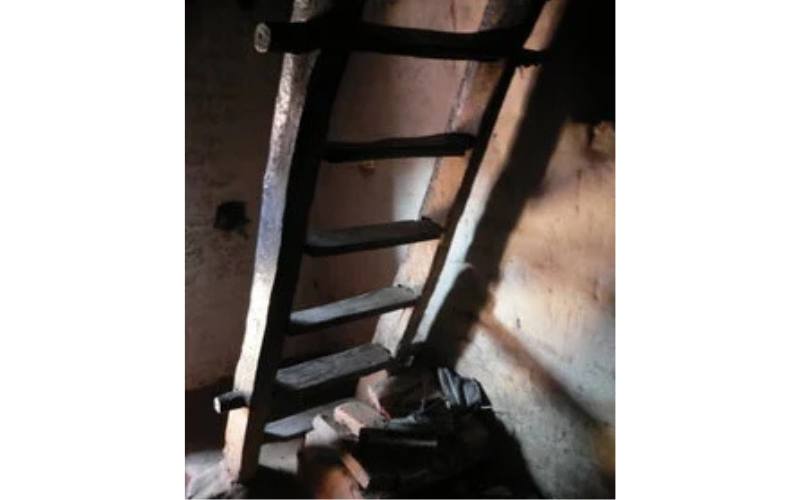
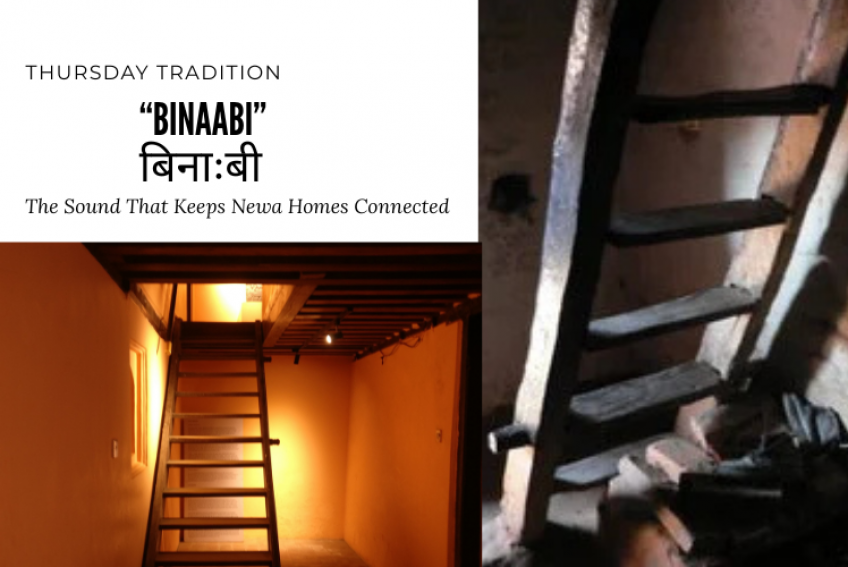
In the Newar community of Kathmandu Valley, where homes in cities like Bhaktapur and Patan still preserve centuries-old architectural logic, staircases are often narrow, steep, and shared. There is no room for sudden encounters. No space for surprise.
So people speak before they step.
“Binaabi” is not a word you find in textbooks or formal dictionaries. It is a lived expression: part warning, part courtesy, part rhythm of domestic life. It signals presence before visibility. It is the human voice compensating for the limits of architecture.
When someone says it while going down, they are not just announcing movement. They are acknowledging the invisible possibility of another body moving upward. It is a small act of care, repeated so often it becomes invisible in itself.
In many Newa homes, especially older structures where staircases are carved almost vertically between wooden beams and brick walls, this habit becomes second nature. Children learn it without instruction. Elders repeat it without thought. Visitors are quickly corrected if they forget.
And yet, like many oral traditions, it carries something deeper than utility.
It reflects a worldview shaped by shared space and constant proximity where privacy is negotiated, not assumed. Where homes are dense but relationships are closer still. Where even movement between floors requires awareness of others.
In that sense, “binaabi” is more than a phrase. It is a reminder that in tightly woven communities, even the smallest actions are collective.
Modern architecture is changing this rhythm. Wider staircases, brighter corridors, and concrete structures reduce the need for such vocal signals. But in older neighbourhoods, especially in the courtyards and heritage homes of the valley, you can still hear it.
A voice before a step.
A pause before movement.
A reminder that someone else is always near.
And perhaps that is what makes “binaabi” quietly poetic. It is not about stairs at all. It is about how people continue to make space for each other, even when space itself is limited.
Thursday Tales/ Tradition is a weekly reflection on culture, memory, and everyday life in Nepal: told through small moments that carry larger meanings.
PC: Wikimedia Commons
Also Read