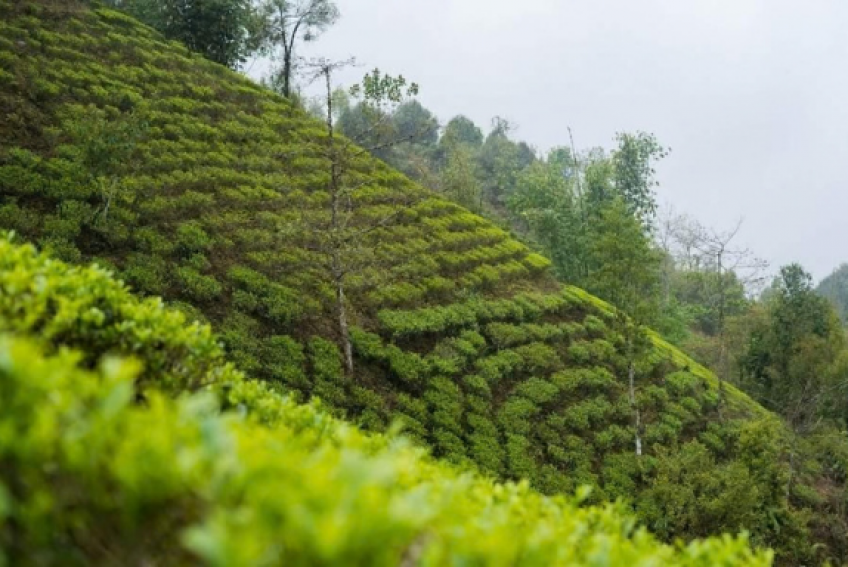
While Ilam is widely recognised for its tea gardens, neighbouring Panchthar receives less attention from travellers. Located in Koshi Province, the district covers approximately 1,241 square kilometres and is known for its terraced farmland, green hills, and traditional villages. Among its lesser-known attractions is Pathivara Tea Estate, where tea cultivation has become an important part of the local agricultural landscape.
Reaching Pathivara Tea Estate involves travelling through hilly terrain and rural roads. One account of a visit describes a two-hour journey along a rocky road before arriving at the estate.
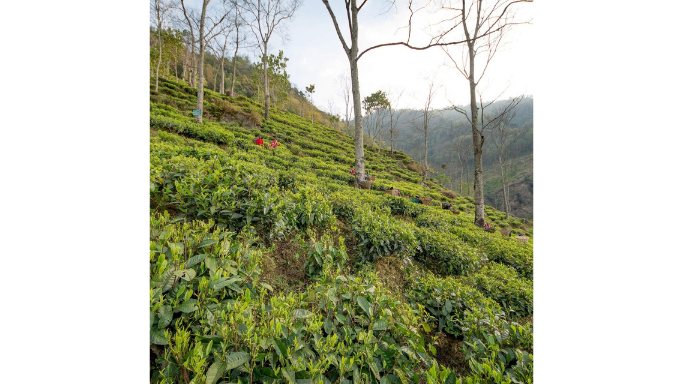
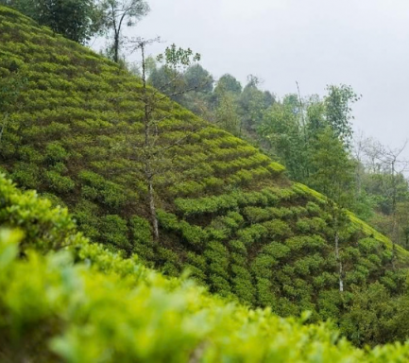
The surrounding landscape features young tea bushes growing across the hillsides, with green valleys and layers of mountains in the background. Early morning is particularly suitable for exploring the plantations, when visitors can observe the tea fields and surrounding villages in daylight.
One of the most interesting aspects of Pathivara is its tea production process. Workers carefully select fresh tea leaves using the traditional standard of two leaves and one bud.
The leaves are first placed in withering beds, where cool air helps reduce their moisture. They are then wrapped in cloth bundles and rolled by hand on bamboo mats, a process requiring considerable experience and precision.
After rolling, the leaves pass through an industrial drying machine before being collected in bamboo trays for further cooling and drying. The estate produces Nepali Silver oolong tea using these techniques.
Beyond tea cultivation, Panchthar offers opportunities to experience the traditions of eastern Nepal. The district is home to Limbu, Rai, Brahmin, Chhetri, and other communities. The Limbu community celebrates Chasok Tangnam, a harvest festival expressing gratitude for agricultural produce. Visitors can also observe traditional farming practices and experience local hospitality in villages surrounding the tea-growing areas.
Small tea estates such as Pathivara also highlight the challenges faced by independent tea producers. Although these growers can produce high-quality tea, expensive certification requirements and limited market access may affect their ability to compete with larger estates. Direct purchases and responsible tourism can help support local farmers and encourage greater awareness of Nepal’s tea industry.
Travellers planning to visit Pathivara Tea Estate should arrange their visit in advance, particularly if they wish to observe tea processing or participate in a tasting. Road conditions can be challenging, so allowing extra travel time is advisable.
Comfortable walking shoes, warm clothing, and drinking water are useful when exploring the hillside plantations. Tea processing activities may vary depending on harvesting schedules, making prior coordination with the estate important.