

 Source::Rss
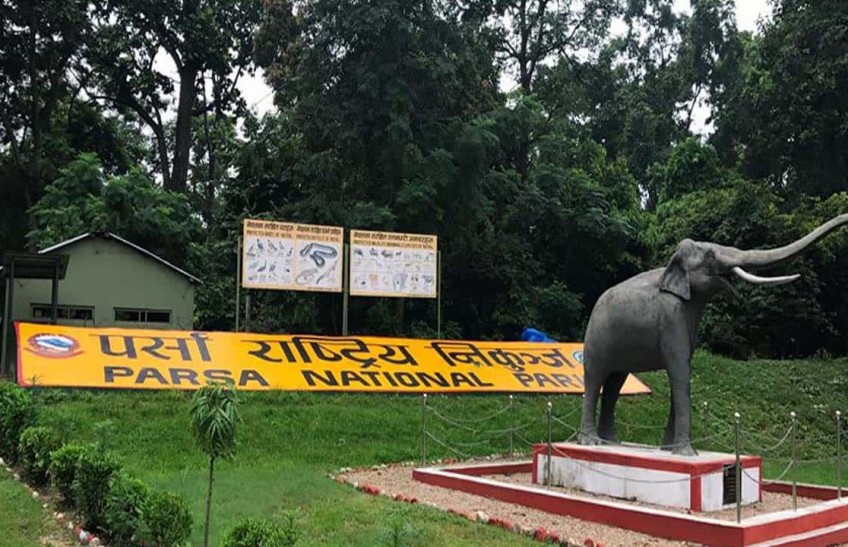
Recently, Parsa National Park has been developing as a tourist destination. The park, which is considered to be the main habitat of the Raithane elephant found in Nepal, has recently become a center of attraction for domestic and foreign tourists.
It was declared as the 12th national park of Nepal in 2074 by the government based on the development of tourism potential and infrastructure. The park, which is connected to three districts namely Bara and Makwanpur along with Parsa, has been opened for domestic and foreign tourists.
According to the park administration, there has been an increase in the number of tourists coming from the neighboring countries of India to the park, which is considered to be rich in biodiversity along with its natural beauty.
140 tourists have visited the park during the eight months of the current fiscal year 2079-80. 55 Nepalese and 12 foreign tourists entered the park through the main entrance half-load of the three ways to enter the park. Similarly, 50 tourists from the Garhuwaline entrance, 42 from Pratappur, and 8 from outside have come to visit the park, according to the park administration.
In the last year 2078-79, 777 Nepali and foreign tourists visited the park. 769 Nepalese and eight foreign tourists entered the park in the year 2078/79. Rs 88 lakh 46 thousand 679 revenue was collected from the forest area, administrative, fines, tourist, etc. Within the park, there are religious places such as the historical and ancient Maya temple, Dugheshwar Mahadev Temple, while the natural and picturesque temples such as Kamini Dah, Halkhoria Dah, and Lauki Dah have become major tourist attractions. Apart from this, the dense presence of rare wild animals and birds in the park attracts tourists.
In the park, there are rarely wild animals such as spotted tigers, white elephants, one-horned rhinoceros, bears, red deer, chital, wild boar, indigo cow, gaurigai, etc. In the past, water was the main problem in the park, and with the easy availability of water, the number of forest animals, including tigers, has also increased. According to the recent tiger census of 2022 conducted by the park, the number of tigers in the park has reached 41.
Although there are 163 cows, 40 to 50 elephants, and 8 to 10 one-horned rhinos in the park, only three rhinos are mentioned in the statistics. The number of wild animals has increased recently due to the easy availability of water in the artificial ponds constructed by the park.
Spread over a total area of 627.39 square kilometers, the park is home to 37 species of mammals such as rare tigers, bears, rhinos, elephants, chitals, leopards, wild dogs, nilgai and gaurigai, 490 species of birds, 13 species of reptiles and 31 There is a habitat for butterflies of the species.
A dozen viewing pillars have also been built inside the forest of the park for the observation and wandering of the tourists who come to visit the park. Likewise, a dozen elephants have been kept in the park's elephant enclosure to take the tourists on a jungle safari. According to Chief Ram, an arrangement has also been made for tourists who do not want to go on a jungle safari on elephants to go on a jungle safari in their private vehicles.
For foreign tourists entering the park, the entrance fee is Rs.1000 per person and Rs.650 for riding an elephant, while for Nepali tourists, the entry fee is Rs.50 per person and Rs.650 for riding an elephant. In order to make the park a tourist destination in Madhes province, along with the construction of necessary physical infrastructure for tourists, the promotion of the park has also been prioritized.
Sunakhari intermediate community homestay has also been operated in the intermediate area to welcome guests visiting the park. It entertains the guests who come here with delicious food and music along with delicious hospitality.
"Compared to the past, the number of domestic and neighboring Indian tourists has increased in the park", said Surya Khadka, information officer of the park, "There are more domestic tourists than foreign tourists."_Rss
photo credit: Vivaan Adventure
Also Read
