

 Source::
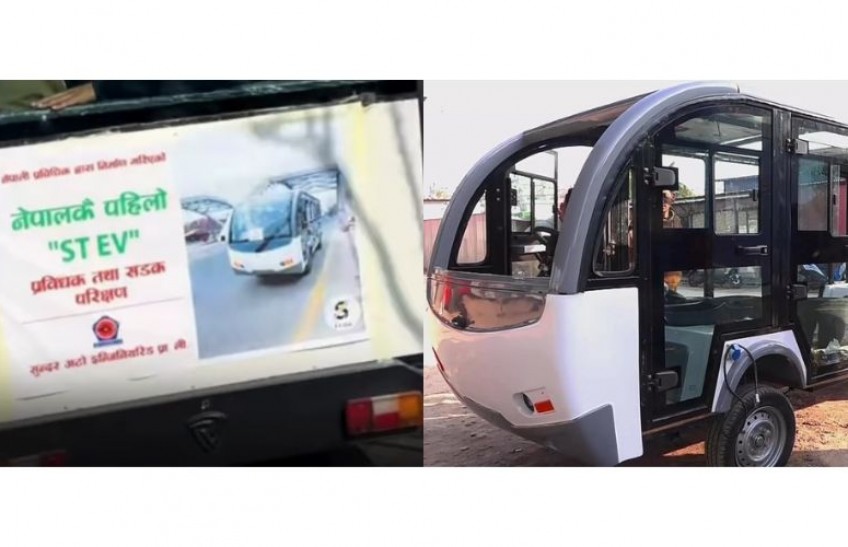
Nepal has taken another step towards cleaner and more sustainable transport, with Sundar Auto Engineering Pvt. Ltd. introducing a locally assembled 14-seater electric vehicle (EV) intended for public transportation.
Designed for short-distance and urban commuting, the vehicle reflects a gradual shift from reliance on fully imported EVs towards local assembly and adaptation for Nepal’s terrain and transport needs.
While the company describes the model as among the first of its kind in Nepal, broader industry verification remains limited.
The development comes at a time when electric mobility is gaining significant traction across the country, particularly in urban centres such as Kathmandu.
Driven by favourable government policies, reduced import duties, and Nepal’s strong hydropower capacity, EV adoption has accelerated in recent years. This has positioned Nepal among the more dynamic emerging EV markets in South Asia.
Locally assembled vehicles could further strengthen this ecosystem by:
The 14-seater format aligns closely with Nepal’s existing public transport system, where microbuses and vans remain a primary mode of urban mobility.
If deployed at scale, such EVs could:
However, the extent of integration into existing transport networks will depend on policy support, operator adoption, and infrastructure readiness.
Despite the positive momentum, Nepal’s EV transition continues to face structural challenges, including:
Addressing these constraints will be essential for ensuring long-term viability and public confidence.
Moving Towards Sustainable Transport
The introduction of a locally assembled public transport EV reflects a broader ambition: to build Nepal’s capacity in sustainable mobility while leveraging its clean energy advantage.
As initiatives like this gain traction, they point towards a future where locally adapted, environmentally friendly transport solutions play a larger role in shaping Nepal’s mobility landscape.
Also Read
