

 Source::
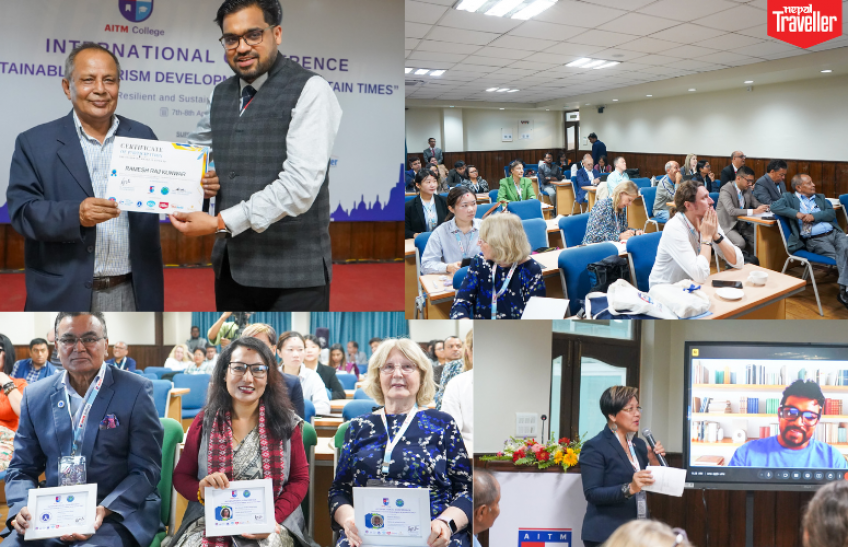
Hosted by AITM College, the two-day International Conference on "Sustainable Tourism Development in Uncertain Times" successfully brought together academics, professionals, and tourism stakeholders from across the globe to share insights, ideas, and innovations for steering tourism toward a more sustainable, inclusive, and resilient future.
Honoring Legacies and Exploring New Frontiers in Sustainable Tourism
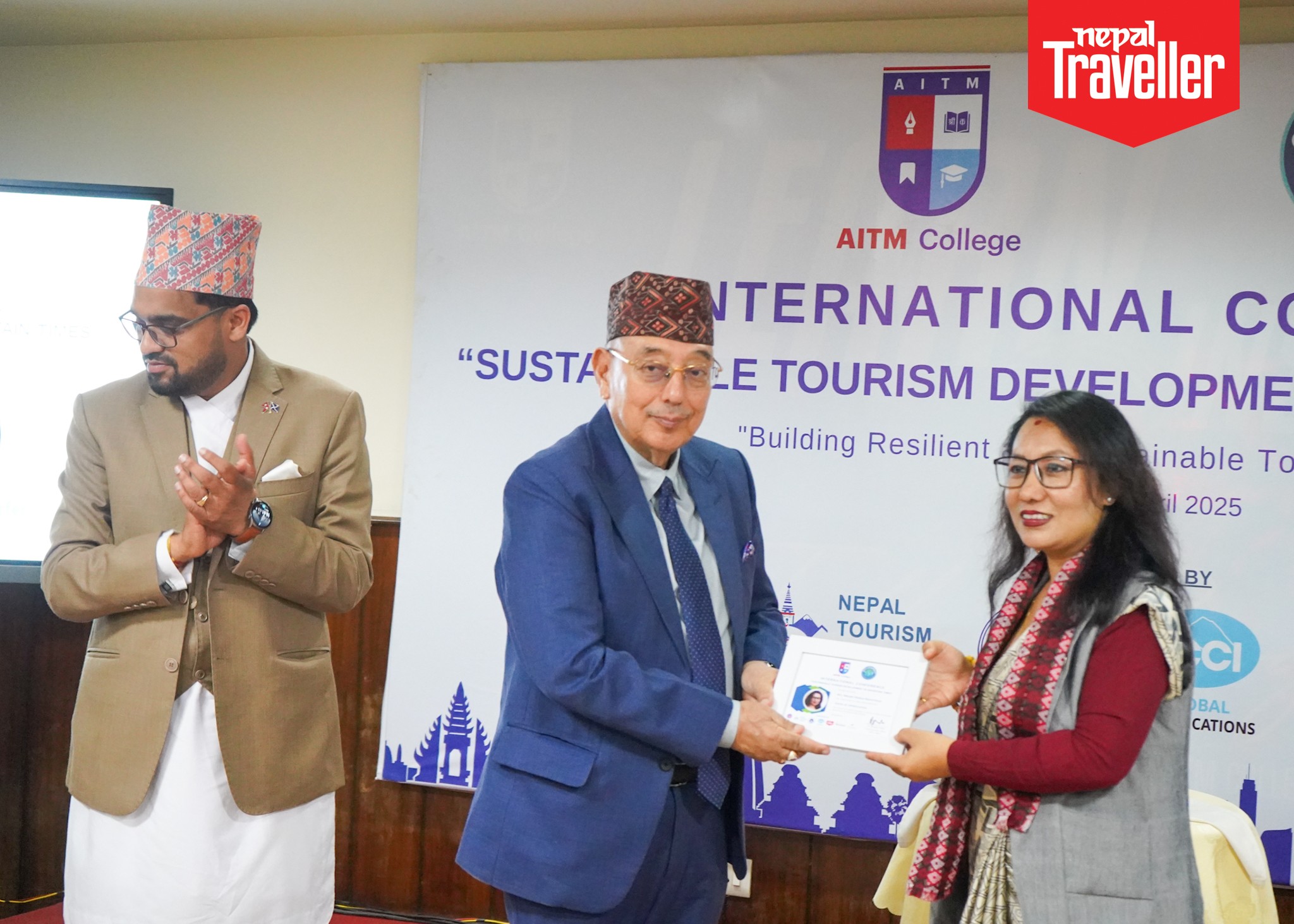
The conference opened with a warm and poignant speech by Dr. Roshan Rathi, CEO of AITM College, paying tribute to the loving memory of Dr. Wendy Hillman, whose legacy in sustainable tourism education continues to inspire. Guest of Honour Dr. Prof. Sriram Bhagut Mathe graced the stage to present tokens of love and appreciation to distinguished guests, setting a tone of gratitude and reverence.
The first day of the conference was divided into different sessions by presenter from different countries where the first session launched with presentations by Carl Cater on “Environmental and Cultural Change in the Qomolangma (Everest/Sagarmatha) National Nature Reserve 1921–2024”, offering a deep dive into the historical changes in the region. Smrittee Panta on “Tourism and Livelihood Sustainability: Evidences from Protected Areas in Nepal”, addressing the intersection of tourism and local livelihoods. And an engaging Q&A session closed the session, followed by a tea break and a visit to curated exhibition stalls.
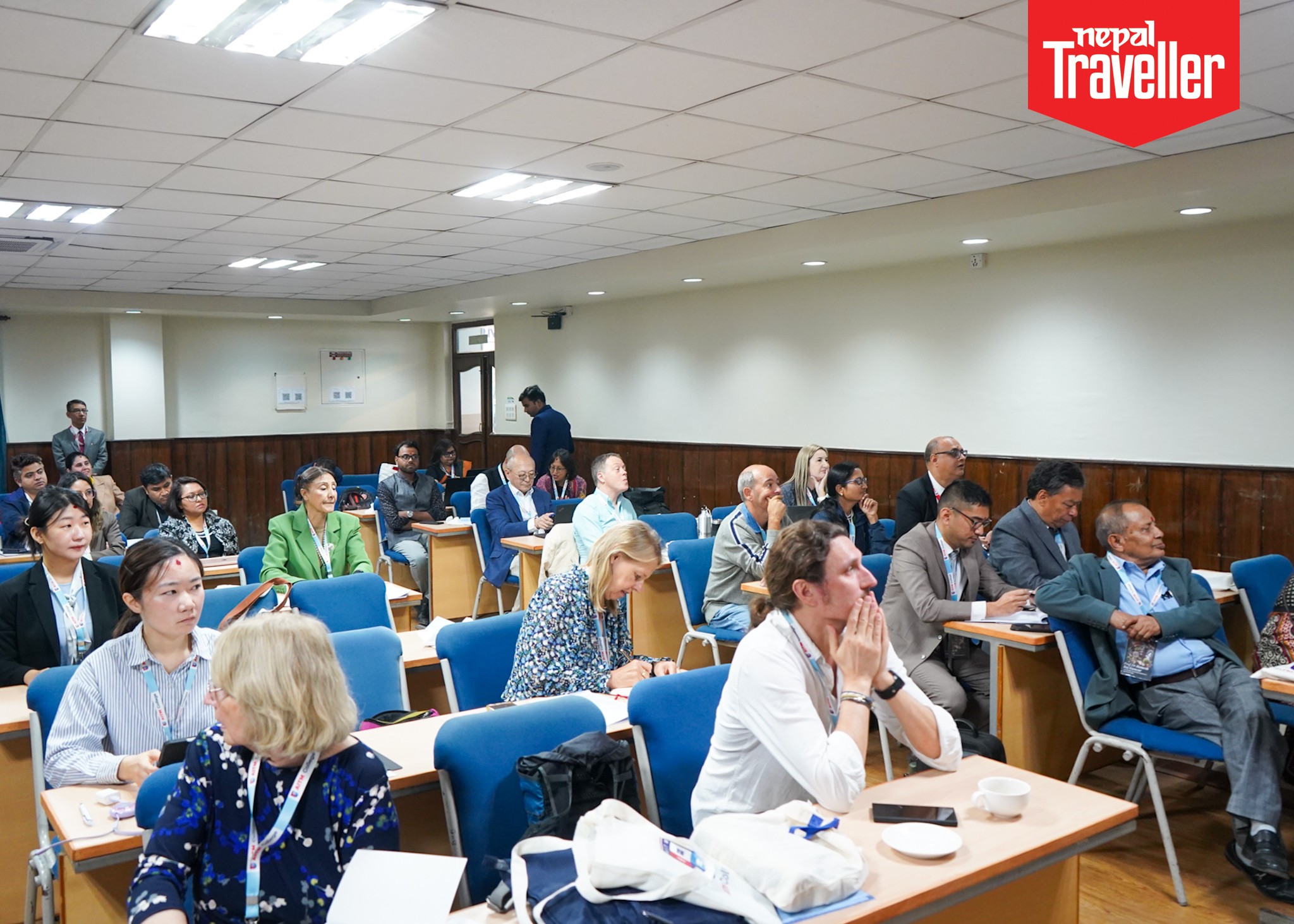
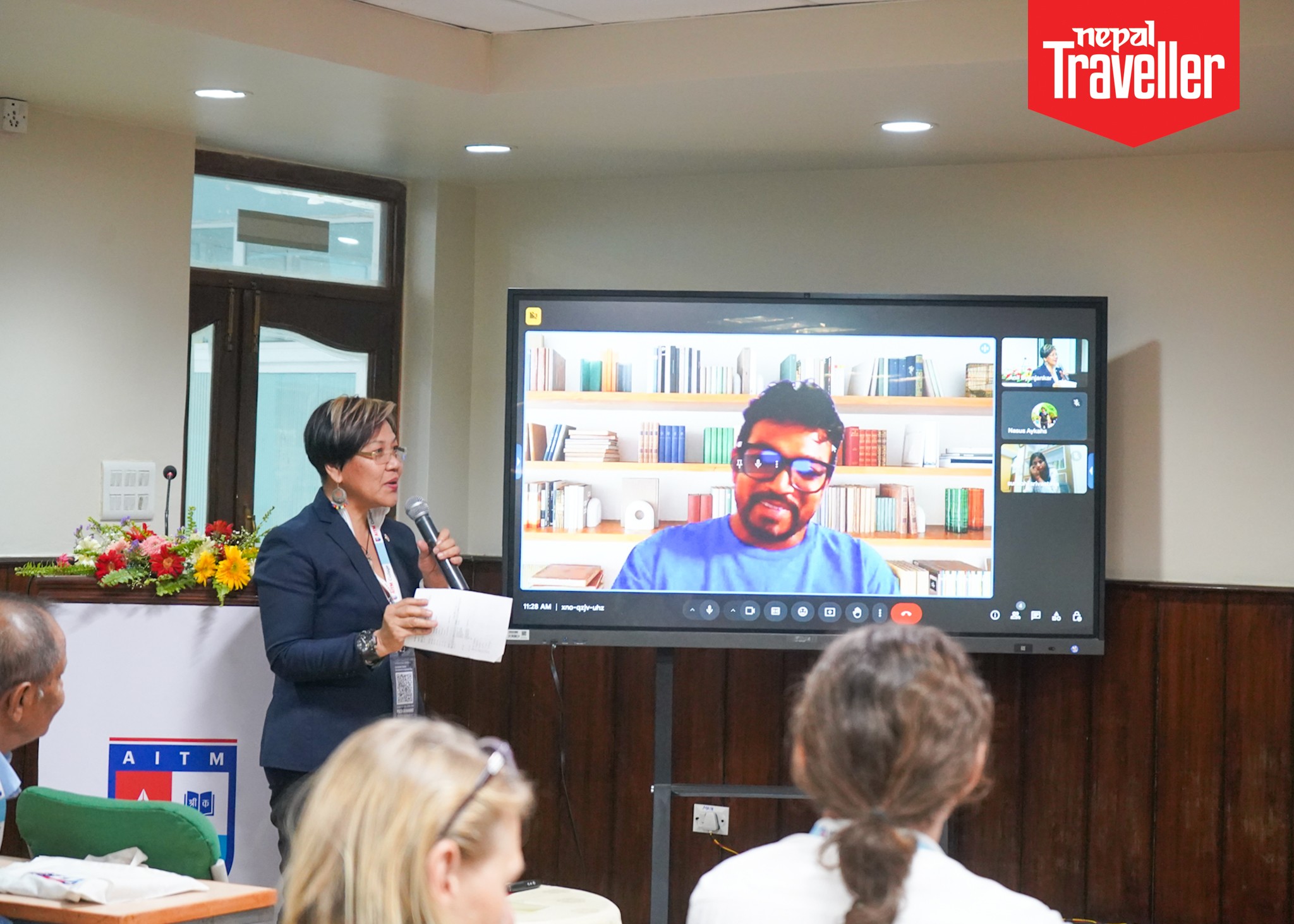
Session 2 featured both online and offline presentations, enhancing accessibility and encouraging diverse viewpoints. Topics included ethical and immersive holiday experiences by Faye Taylor, sustainable niche tourism in Sri Lanka by Madura Pathirana (online), and a forward-looking approach to craft heritage and community development (online).
The 3rd session focused on post-pandemic recovery, community-based tourism, and mountain travel dynamics. Presentations included Michal Apollo on guest-host relationships in mountain tourism, Yali Wang on hotel crisis management in post-COVID Phuket, and Iqbal Ahmad Bhat (online) on ecotourism as a sustainable livelihood from a community perspective. The session concluded with a lively discussion on these key themes.
The next session, led by Dr. Basant Prasad Joshi, showcased research on digital storytelling in Himachal’s Lahaul Valley, urban birding in Okhla Sanctuary, and rural tourism through the “Gangs of Greenpur” initiative. A key takeaway was the importance of preserving local identities in tourism. Day 1 concluded with the launch of two books—Pro-Poor Mountain Tourism and the Routledge International Handbooks of Adventure Tourism—and a closing address by Prof. Eugenia Wickens, who recapped the day.
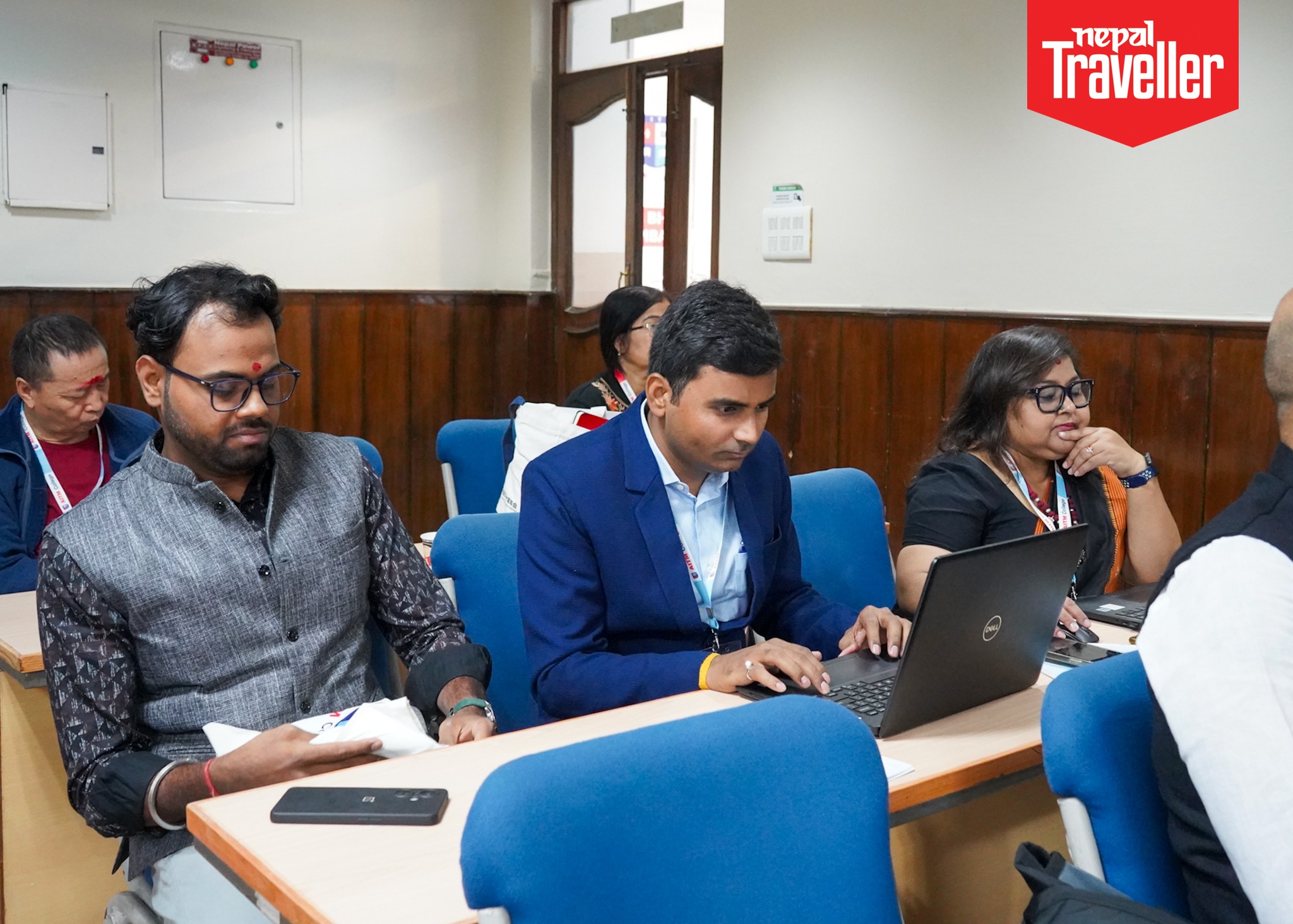
Day 2: From Community Insights to Climate Action in Tourism
Session 6 resumed with three compelling presentations and a thought-provoking Q&A session centered around the theme of overtourism and anthropocentrism. Questions such as “What is overtourism?” and “Should local communities adapt their lifestyles to suit tourists?” led to important reflections. Quoting Ann Suwaree Ashton,“The locals cannot and should not change their way of life and lifestyle just for the sake of tourism and what tourists want. That’s not sustainable tourism.”
The 7th session moderated by Prof. Eugenia Wickens, explored youth empowerment and ethical tourism certification. Heike Schanzel emphasized including children's voices through digital tools, while Gansukh Damba discussed voluntary certification for tourist camps in Mongolia. The session highlighted themes of childism, inclusivity, and community-based development. Mr. Rajendra Kumar Khetan, Senator of Kathmandu University, was honored as Guest of Honour, with Dr. Roshan Rathi acknowledging his contributions to education and sustainability.
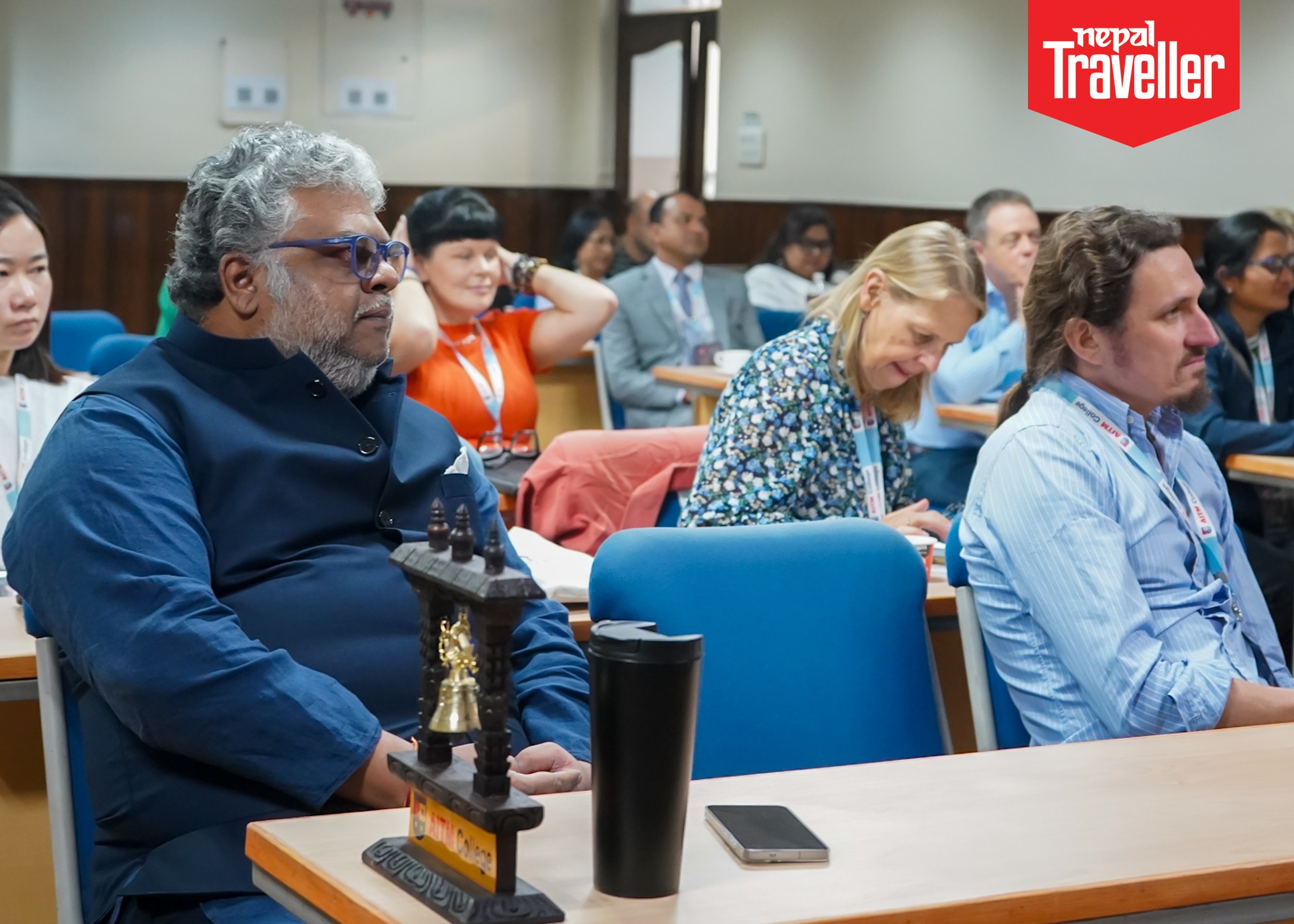
Following lunch, Mr. Sunil Sharma from the Nepal Tourism Board gave an inspiring speech on responsible and sustainable tourism, receiving a token of appreciation from Prof. Eugenia Wickens. The momentum continued with a dynamic panel discussion on “Tourism and Climate Change: Is Nepal Prepared for the Impact?” featuring experts from academia, hydropower and journalism. Moderated by Mr. Terence Lee, the session sparked meaningful dialogue and audience engagement, concluding with tokens of love for the panelists and moderator.
The final session featured diverse presentations on food tourism in Central Asia, brand engagement during uncertain times, and a special showcase by Prakrit Resort and Organic Farm of Nepal. The session included an online presentation by Nick Naumov on gastronomic tourism and Carlos Costa on sustainable tourism planning. Moderated by Carl Cater, the session concluded with the Best Paper Award, presented to Prof. Eugenia Wickens on behalf of Smrittee Kala Panta.
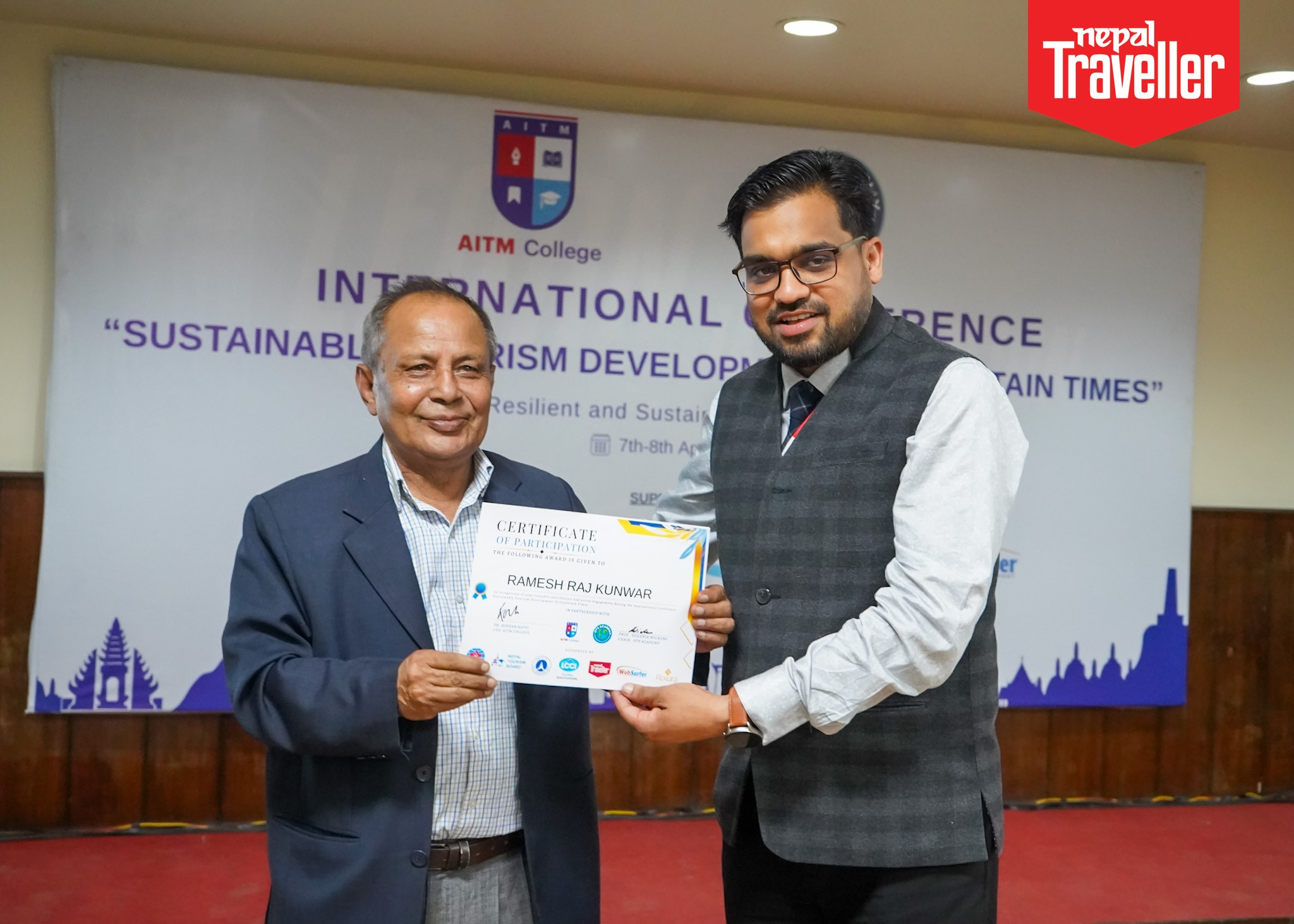
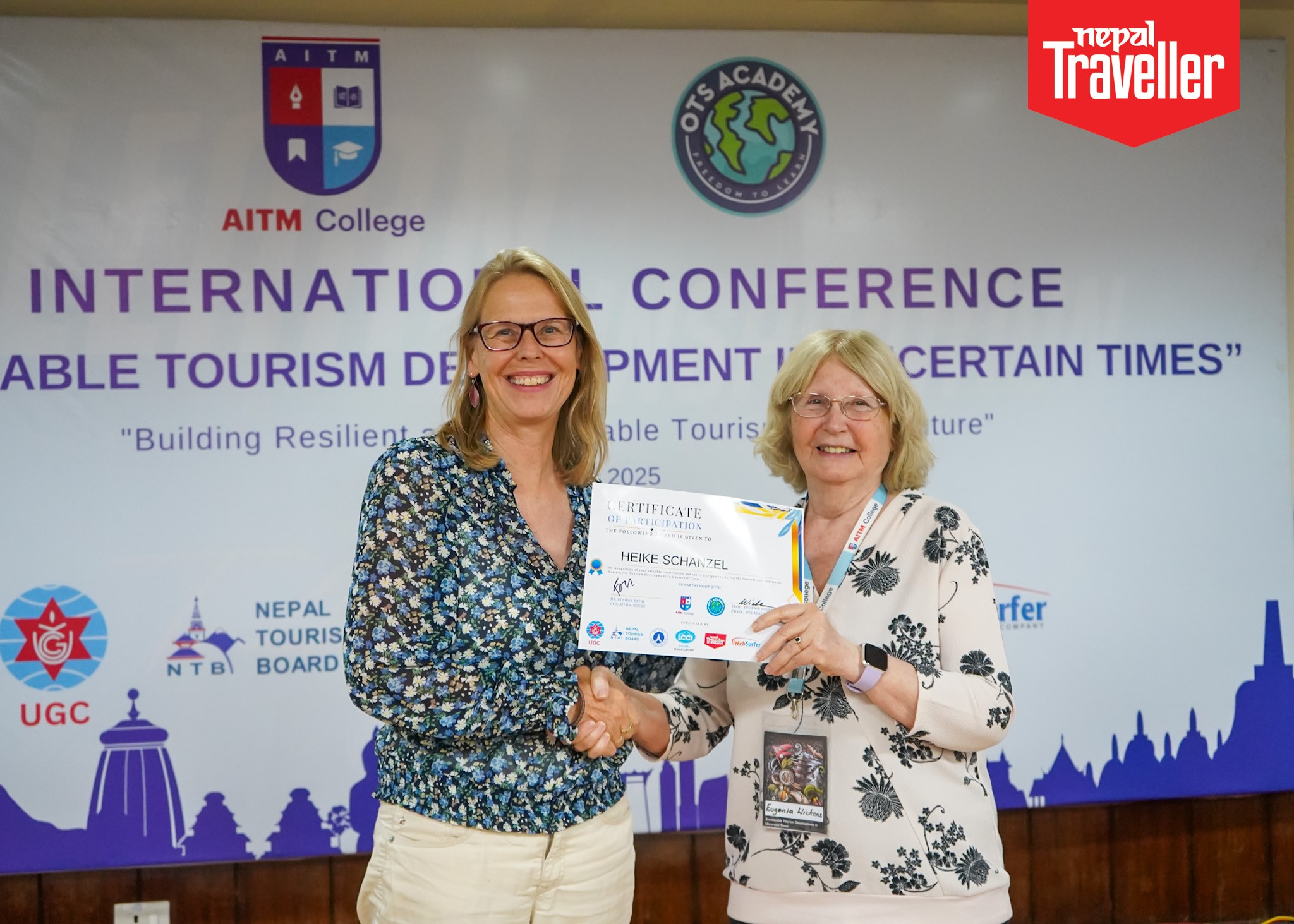
The conference closed with certificates of appreciation distributed to all participants, volunteers, and contributors, recognizing their role in making the event a success.
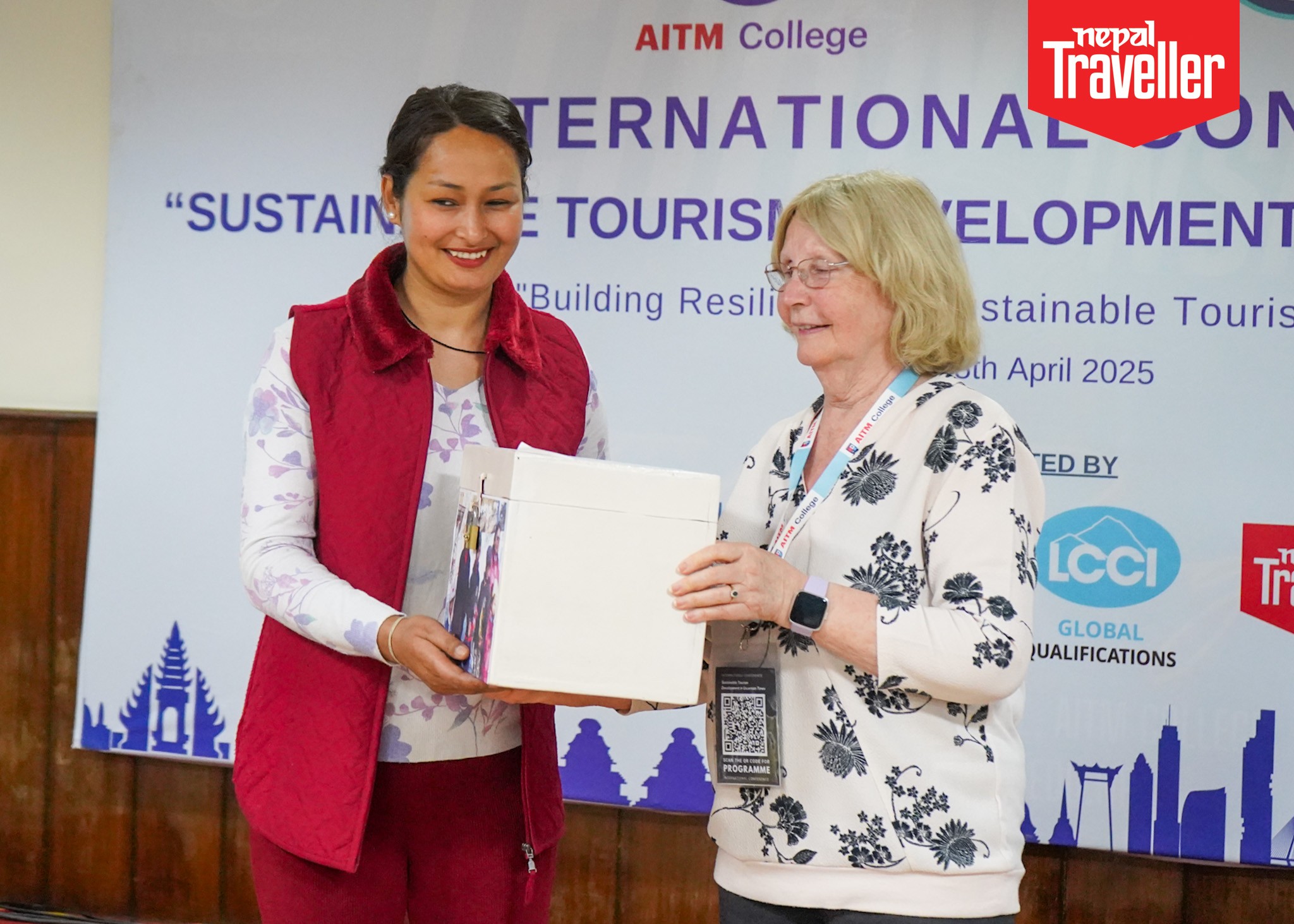
In a touching final gesture, Renuka Manandhar from Seven Women Centre( Now Sungabha Nepal) received a donation box from Prof. Eugenia Wickens, in loving memory of Dr. Wendy Hillman. This symbolic act of compassion and continuity beautifully captured the spirit of the conference—empowering communities, respecting people and building a sustainable tourism future together.
Also Read
