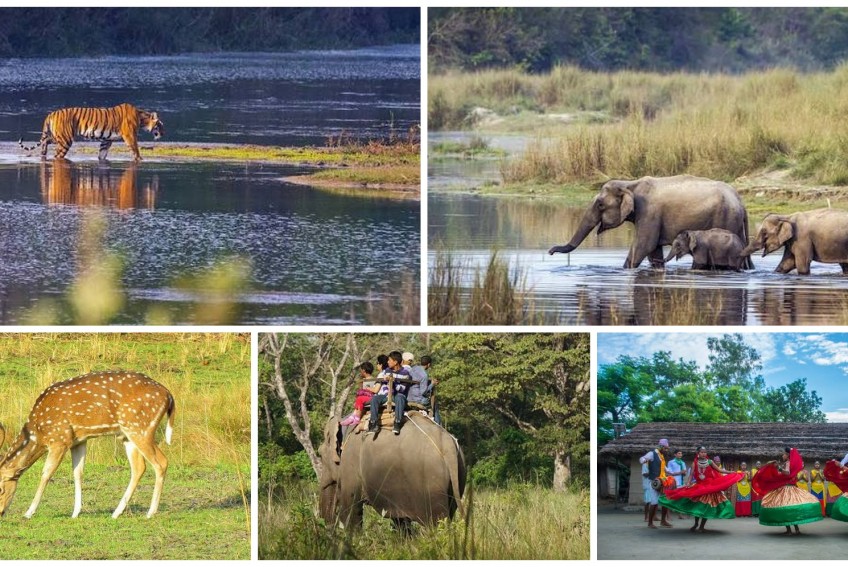
Most travelers come to Nepal for the Himalayas, but some of the country's most unforgettable moments happen far from the mountains. In the far-western lowlands, Bardiya National Park protects the largest and most undisturbed wilderness in Nepal's Terai.
It is a land of sal forest, tall grassland and braided rivers, where tigers, rhinos and wild elephants still roam. Whether you walk its trails, float its rivers or explore the Tharu villages at its edge, Bardiya rewards those who make the long journey.
A jungle walking safari is the best way to feel Bardiya. With a guide leading the way, you wade across streams, move quietly through dense forest and step out onto open grassland where deer graze at a distance.
Every rustle in the undergrowth sharpens your senses. A full-day walk takes you deep into the park toward the banks of the Karnali River, where your chances of seeing wildlife are highest.
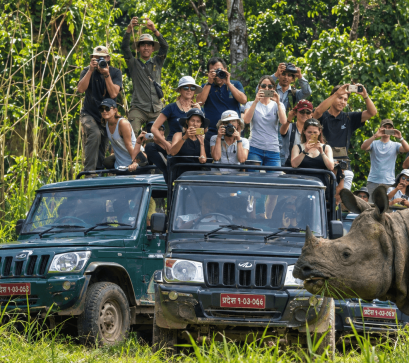
A jeep safari reaches corners of the park that are hard to get to on foot. You pause at watchtowers, wait silently at waterholes and scan the riverbanks for animals coming to drink. It is a relaxed way to take in Bardiya's sweeping landscapes.
Rafting on the Karnali River is less about rapids and more about perspective. As you drift gently downstream, crocodiles sun themselves on sandbanks and kingfishers dart across the water. If you're lucky, the rare Gangetic river dolphin may surface nearby.
With hundreds of species, Bardiya is a paradise for birdwatchers. At dawn and dusk the forest comes alive with calls, and patient visitors may spot the great hornbill or the endangered Bengal florican.
Near the park headquarters, the elephant breeding center comes alive in the late afternoon, when the elephants return from grazing. Nearby, the crocodile breeding center protects the rare, long-snouted gharial.
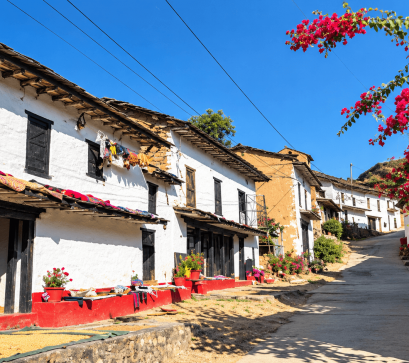
Some of Bardiya's richest experiences lie outside the park. Cycling through Tharu villages, you'll pass mud-and-wood homes, rice fields and water buffalo cooling off in the river. A homestay in Dalla or a dal bhat cooking lesson with a local family offers a warm, genuine connection to this indigenous culture.
What makes Bardiya special is its stillness. There are no crowds or traffic jams of safari vehicles, only the sounds of the jungle. Spotting a tiger takes real luck, and many visitors find only fresh paw prints in the sand. Yet that sense of possibility is what makes every moment here exciting.
The best time to go is October to April. May and early June are best for tiger sightings, though temperatures can reach 40°C. Fly to Nepalgunj and drive three hours, or take the long bus ride from Kathmandu. Stay at least two to three full days, book your lodge in Thakurdwara ahead of time, and bring enough cash.
Bardiya isn't the easiest place to reach, and that is exactly why it remains one of Nepal's true wild treasures.