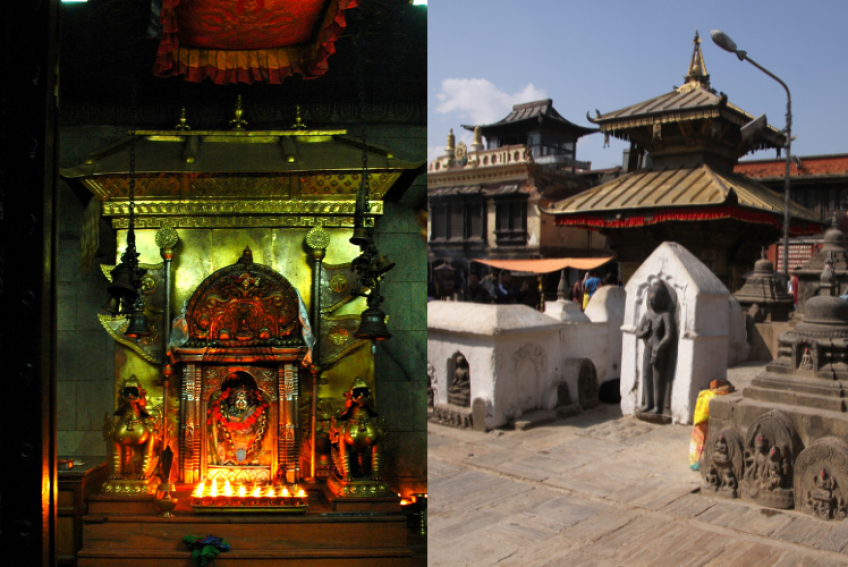
While most visitors to Swayambhunath arrive to admire its iconic white dome, fluttering prayer flags, and sweeping valley views, few realise that tucked quietly within the sacred complex resides one of the most fascinating maternal deities in Buddhist tradition — Hariti.
Revered as a protector of children, fertility, motherhood, and family wellbeing, Hariti occupies a unique place where mythology, compassion, and living faith converge. Her shrine at Swayambhunath remains one of the valley’s most spiritually significant yet understated sacred spaces, visited daily by mothers, devotees, monks, and families seeking blessings for health and protection.
From feared child-snatcher to compassionate guardian, Hariti’s transformation is among Buddhism’s most powerful stories of redemption.
In Buddhist tradition, Hariti was once a fearsome demoness said to have abducted and devoured children. According to legend, she had hundreds of children of her own and believed her actions justified. Distressed parents pleaded with the Buddha for help.
To teach her compassion, the Buddha secretly hid Hariti’s youngest and most beloved child. Overwhelmed with grief and desperation, she searched endlessly for him. When she finally approached the Buddha, he asked her how unbearable it felt to lose even one child despite having hundreds. He then reminded her of the suffering she had inflicted upon countless parents.
The experience transformed Hariti completely.
Filled with remorse, she vowed never again to harm children and instead became their protector. The Buddha accepted her repentance and appointed her as a guardian deity of children, fertility, and mothers.
Today, Hariti is worshipped across Buddhist cultures from Nepal and India to Tibet, China, and Japan, though her presence in Kathmandu Valley remains especially revered.
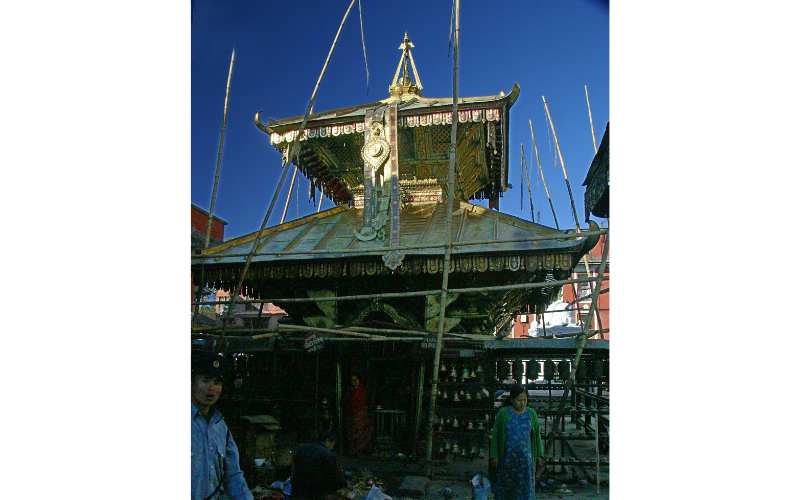
Within the sacred grounds of Swayambhunath lies the Hariti Temple, locally known as Ajima Harati. The shrine reflects the remarkable religious harmony of the Kathmandu Valley, where Buddhist and Hindu traditions have intertwined for centuries.
For Newar Buddhists in particular, Hariti is deeply respected as a mother goddess associated with protection, childbirth, and maternal care. Devotees often visit the shrine to pray for:
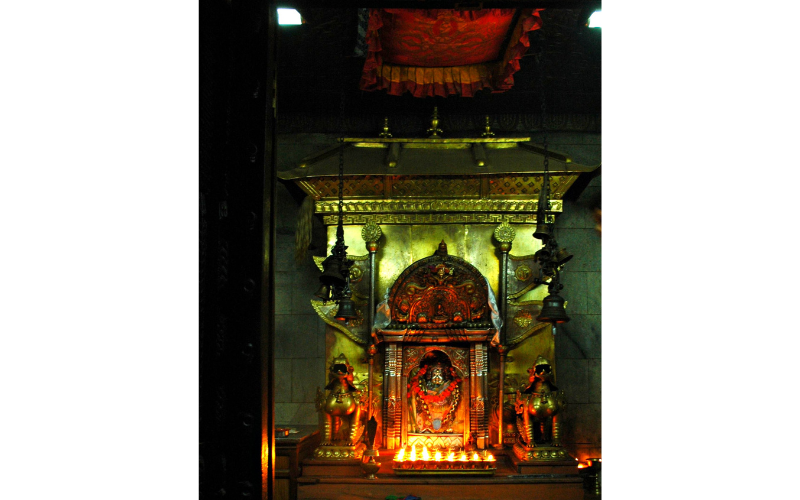
The temple atmosphere differs noticeably from the busier stupa pathways above. Here, the energy feels intimate and deeply personal. Offerings of flowers, rice, lamps, fruits, and incense are common, while mothers frequently bring young children for blessings.
The shrine’s importance becomes especially visible during local religious festivals when long lines of worshippers gather to honour the goddess.
One of the most compelling aspects of Hariti worship in Kathmandu is how seamlessly it blends classical Buddhist narratives with indigenous Newar spirituality.
In Nepal, Hariti is often identified as an Ajima — a protective mother goddess worshipped by Newar communities. These Ajimas are considered guardians of settlements, families, and communities throughout the valley.
This fusion reflects the cultural depth of Kathmandu Valley, where deities are rarely confined to rigid religious categories. At Swayambhunath, Hariti is simultaneously:
Her worship illustrates how Nepal’s spiritual traditions evolved not through separation, but through coexistence and adaptation.
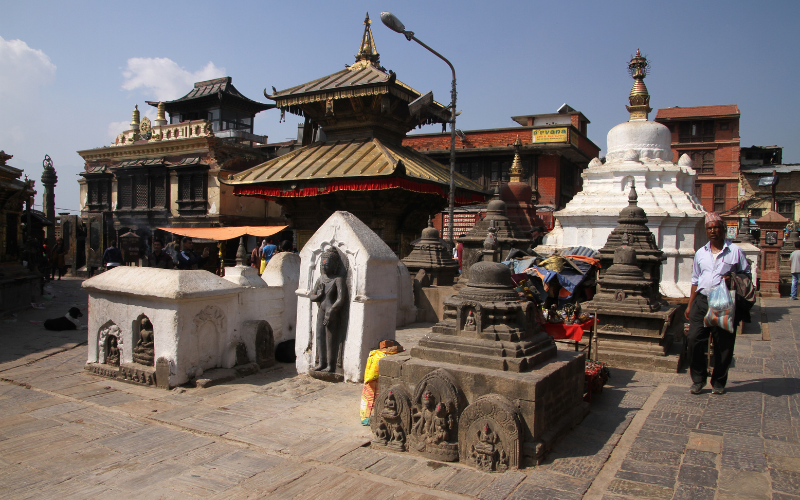
The Hariti shrine at Swayambhunath may appear modest compared to the grand stupa above, yet its spiritual gravity is immense.
Traditional Newar architectural details, prayer offerings, butter lamps, and devotional rituals create an atmosphere rooted in centuries of uninterrupted faith. Unlike monuments admired primarily for aesthetics, Hariti’s temple remains deeply alive in daily worship.
For many locals, the shrine is not simply a historical site but a living sanctuary of maternal protection.
The juxtaposition of Hariti’s temple beneath the watchful eyes of the Buddha atop Swayambhunath also symbolises Buddhism’s enduring emphasis on compassion, redemption, and transformation.
Hariti’s journey from feared demoness to nurturing guardian remains profoundly relevant in the modern world. Her legend embodies themes of:
In many ways, Hariti represents the idea that even destructive forces can be transformed through empathy and wisdom.
At a time when sacred spaces increasingly become tourist backdrops, Hariti’s shrine continues to preserve something deeply human — the timeless hopes of parents praying for their children’s safety and future.
For visitors exploring Swayambhunath, Hariti’s shrine offers a quieter yet profoundly meaningful encounter beyond the panoramic views and iconic stupa imagery.
She is more than a mythological figure. She is a symbol of transformation, motherhood, compassion, and Kathmandu Valley’s extraordinary spiritual syncretism.
Hidden beneath the gaze of the Buddha, Hariti continues to watch over generations of children and families, just as she has for centuries.
PC: WIkimedia Commons
Also Read